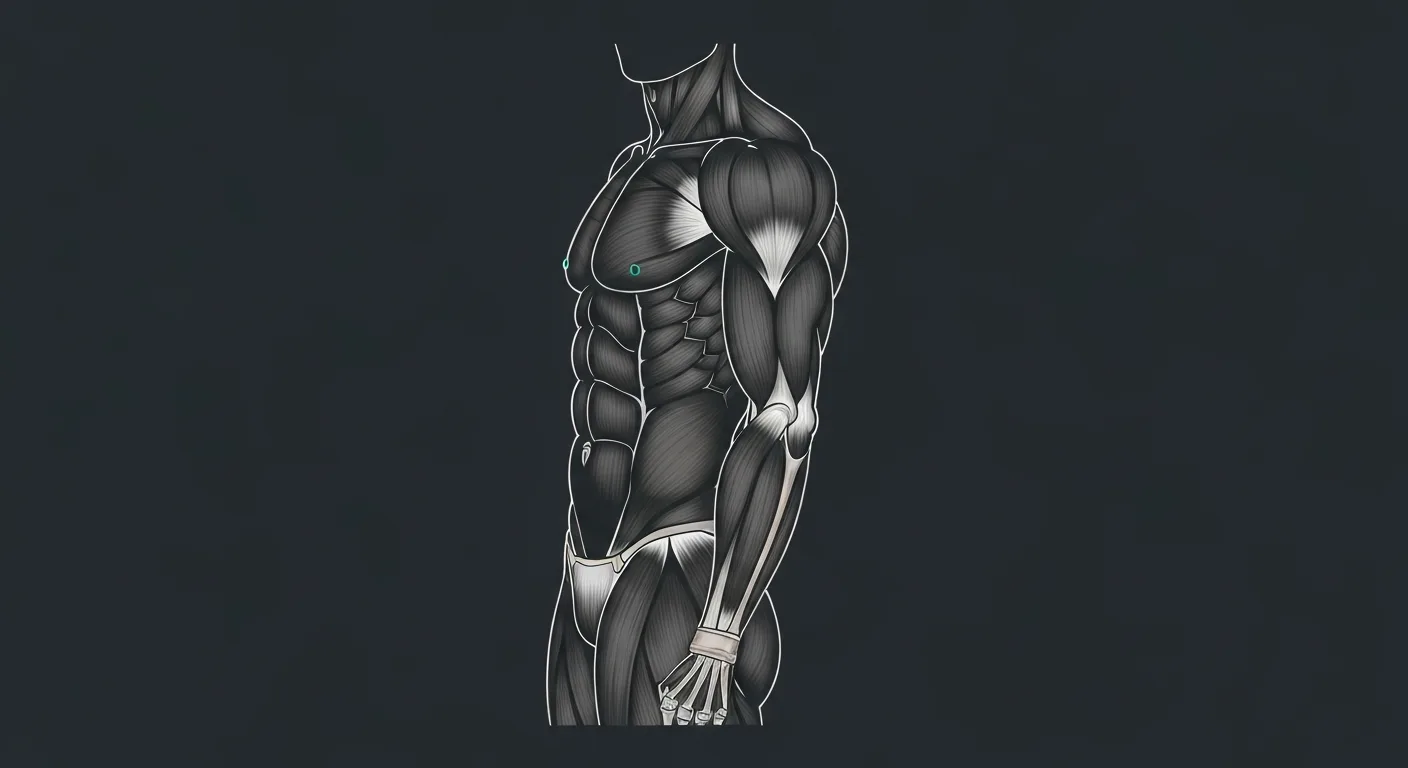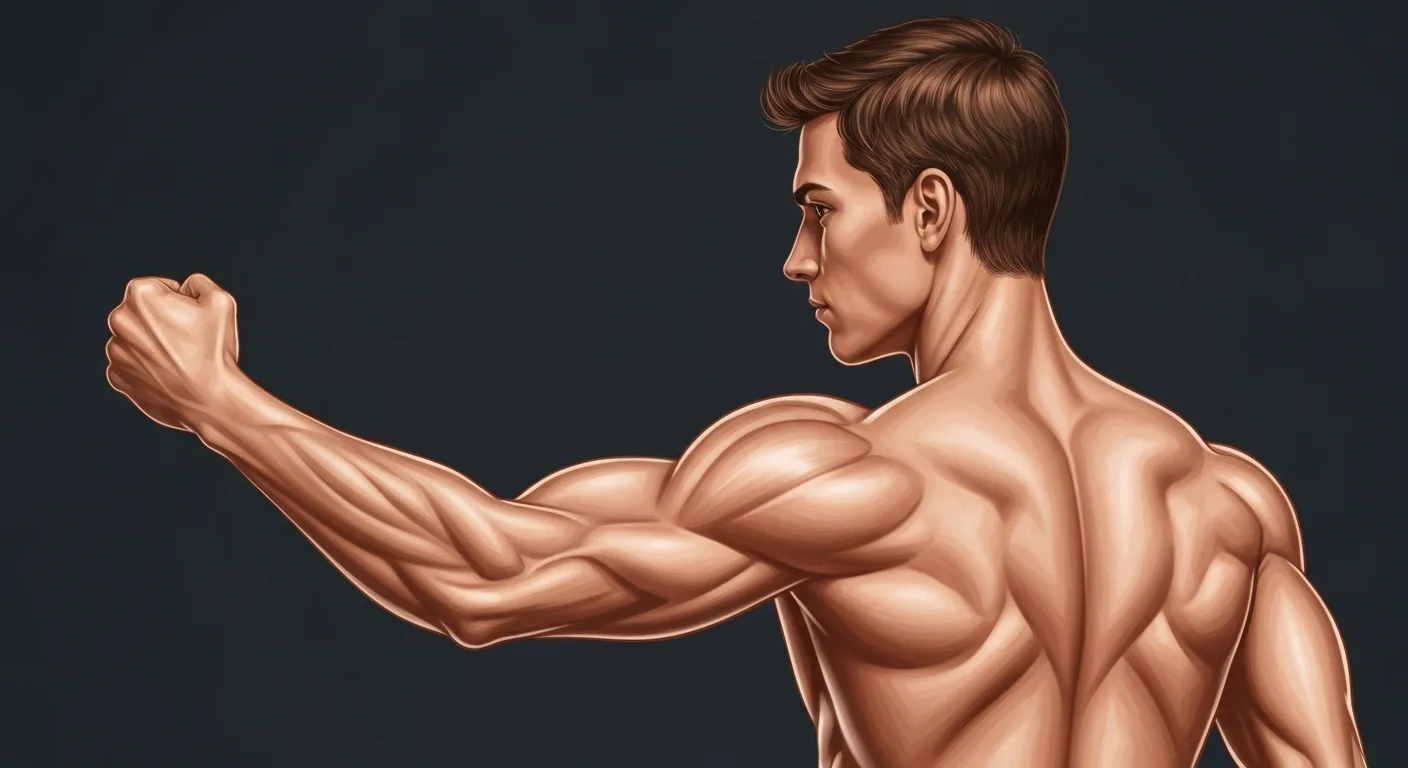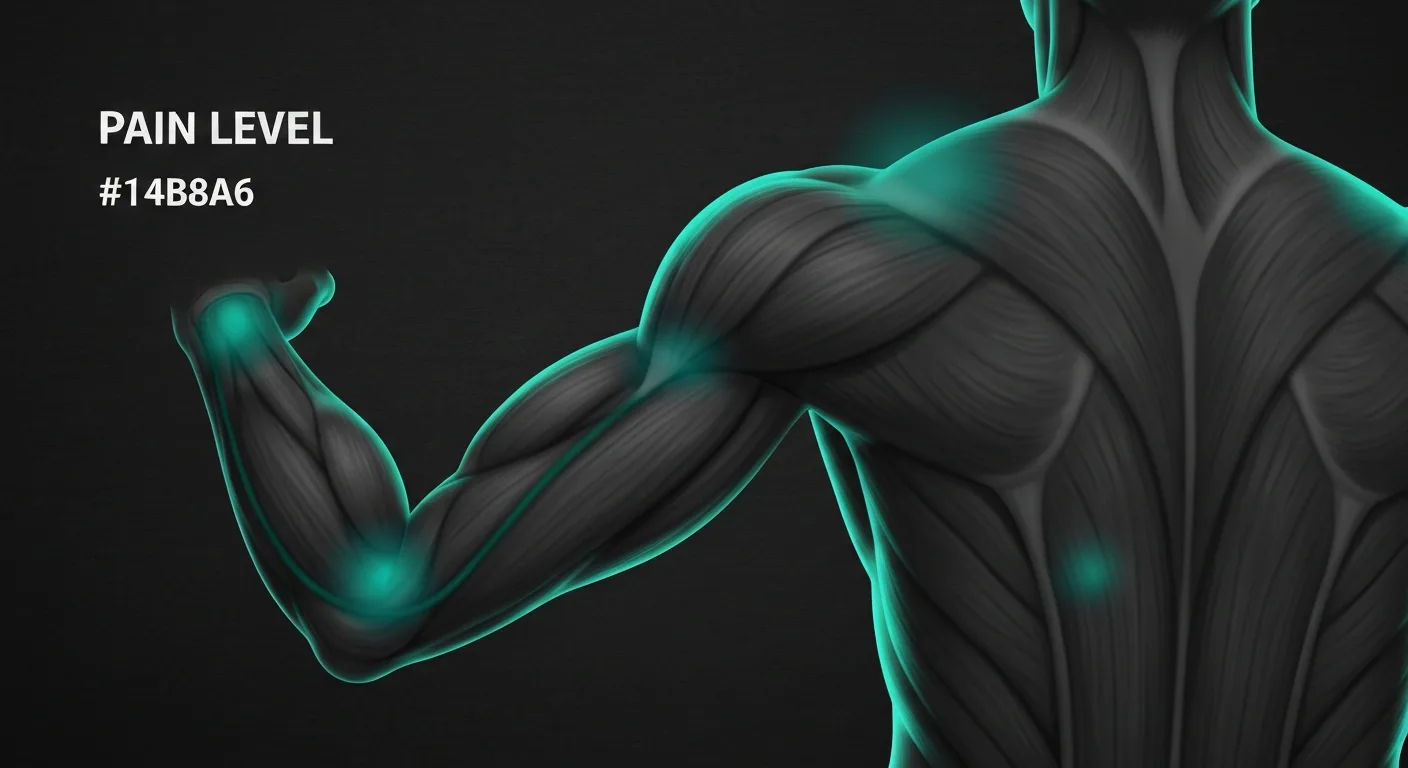
A tricep tattoo typically hurts around 4 to 6 out of 10 on the pain scale. The back of the upper arm has a thick layer of muscle that cushions the needle, making it less painful than bony or thin-skinned areas. Pain increases near the inner arm, elbow, and armpit.
Pain Levels by Location
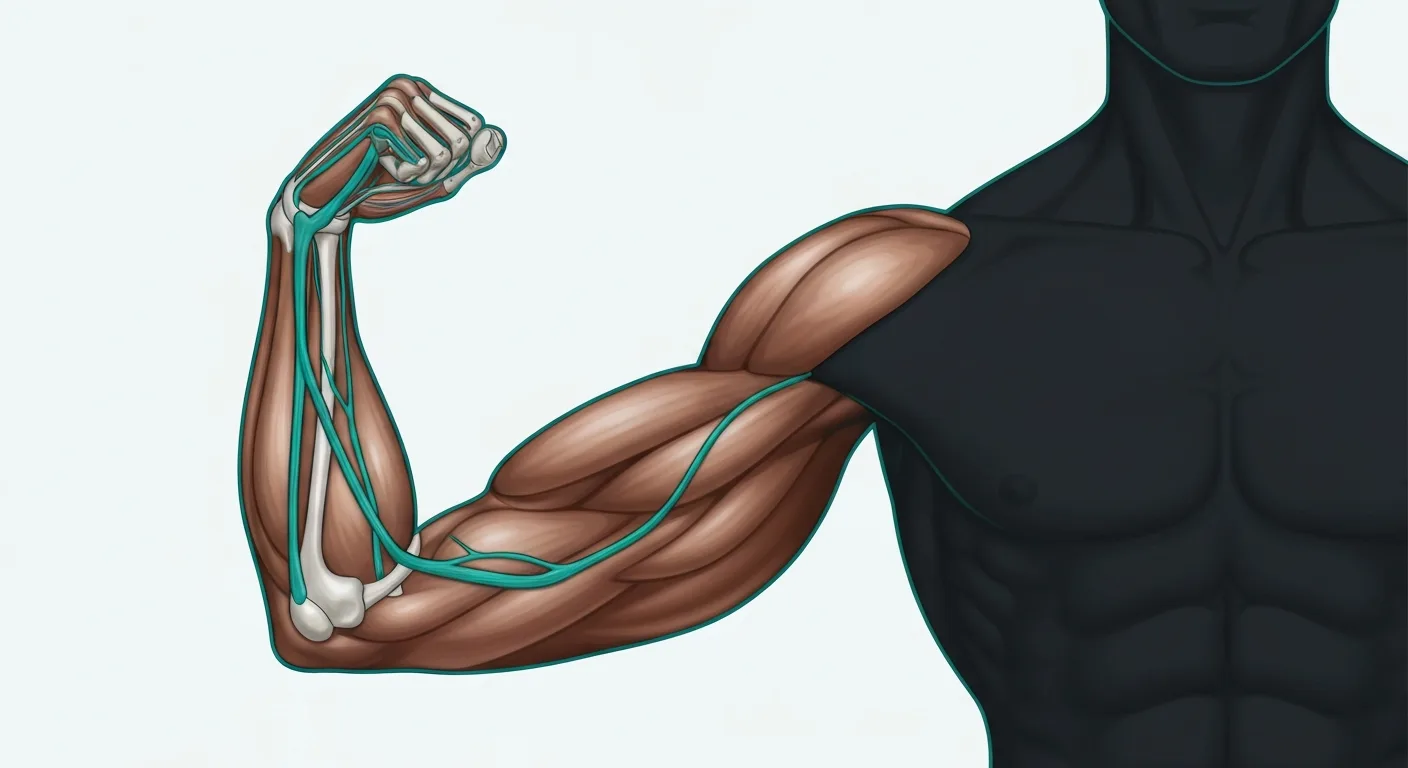
The three heads of the triceps create a large, relatively even surface on the back of the arm — making it a popular tattoo location. However, pain varies significantly depending on exactly where the needle hits.
Least Painful: Outer Tricep (Lateral Head)
The lateral head — the outer portion of the back of the arm — is the least painful zone. It has the thickest muscle belly and a reasonable fat layer between the skin and bone. Most people describe the sensation as a steady, tolerable vibration. This is the best spot for a first arm tattoo.
Moderate Pain: Center and Lower Tricep
The center of the tricep and the area above the elbow (over the medial head) are moderately painful. The muscle thins out as you approach the distal tendon near the elbow, reducing the cushion. Expect sharper sensations in the lower third.
Most Painful: Inner Arm and Elbow
The inner arm (medial side, near the armpit) has thinner skin, more nerve endings, and less muscle coverage. The elbow itself — directly over the olecranon — is one of the most painful areas on the body for tattooing due to the thin skin directly over bone. The armpit crease is similarly sensitive.
What Affects Pain
Individual pain tolerance varies enormously — some people barely notice the needle, others find it very uncomfortable. Muscle mass matters — a well-developed tricep provides more cushion than a lean, undefined arm. Hydration and sleep affect pain sensitivity — well-rested, hydrated skin handles the needle better. Tattoo size and duration — longer sessions (3+ hours) become progressively more painful as endorphins fade. Artist technique — experienced artists work more efficiently with less unnecessary trauma to the skin.
Aftercare and Training
After getting a tricep tattoo, wait at least 48 to 72 hours before any exercise. Avoid direct tricep work — pushdowns, dips, extensions — for 7 to 10 days. The repetitive stretching, compression, and sweating can pull ink, disrupt scabbing, and increase infection risk.
Lower body training is safe after 48 hours. Return to upper body work gradually — start with exercises that do not directly compress or stretch the tattooed area. Keep the tattoo clean, moisturized, and out of direct sunlight during healing. Full healing takes 4 to 6 weeks, but most people can resume normal training by 10 to 14 days with proper care.
Tattoo Aftercare Cream
Moisturizing aftercare for new tricep tattoos.
Why we suggest it: Prevents scabbing, preserves ink quality, speeds healing.
Check Price on Amazon →As an Amazon Associate, we earn from qualifying purchases.
Choosing a Tricep Tattoo Placement
Understanding the arm muscle anatomy helps you choose placement that works with the muscle shape rather than against it. The tricep is a large, relatively flat canvas — designs that follow the natural curve of the three heads tend to look best and age well. The outer tricep is the most visible from the side and the least painful — making it the ideal starting zone for most people.