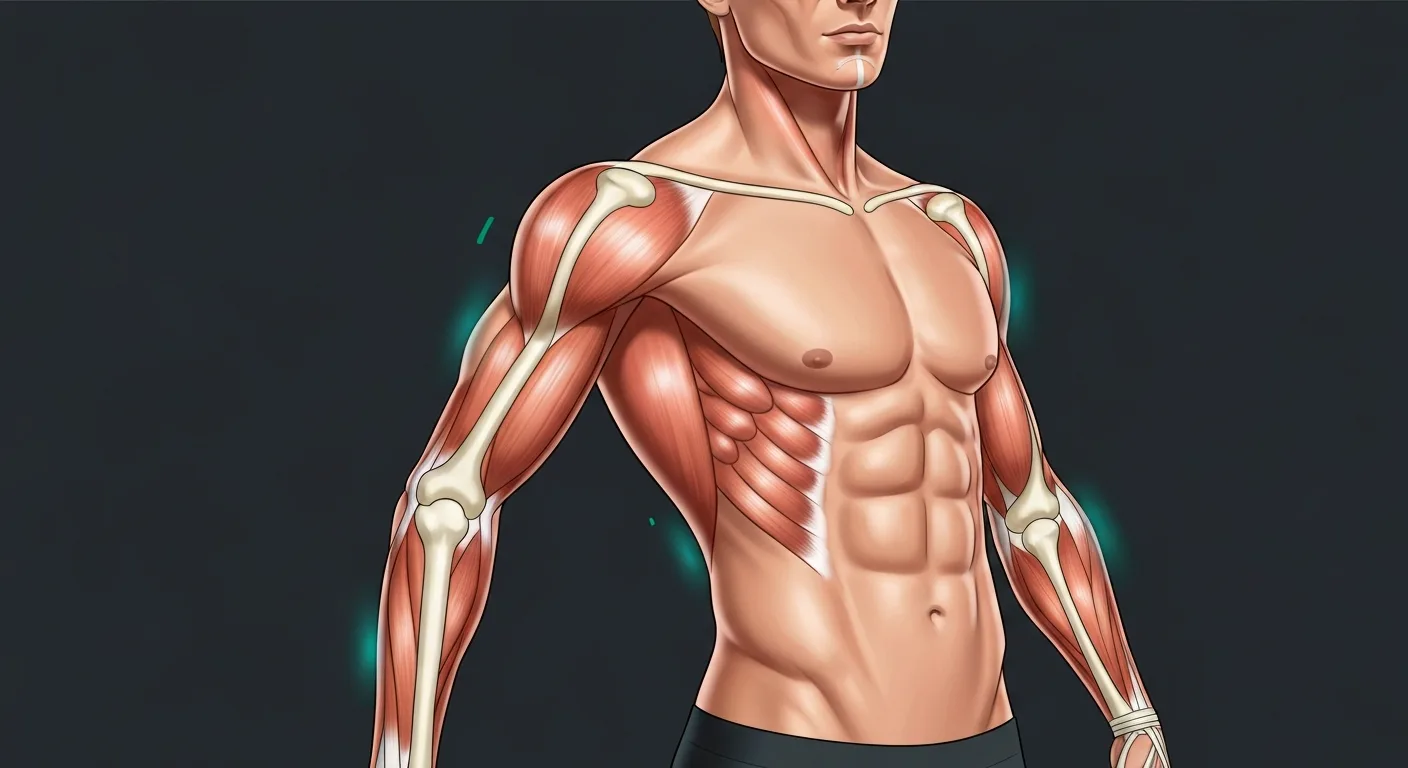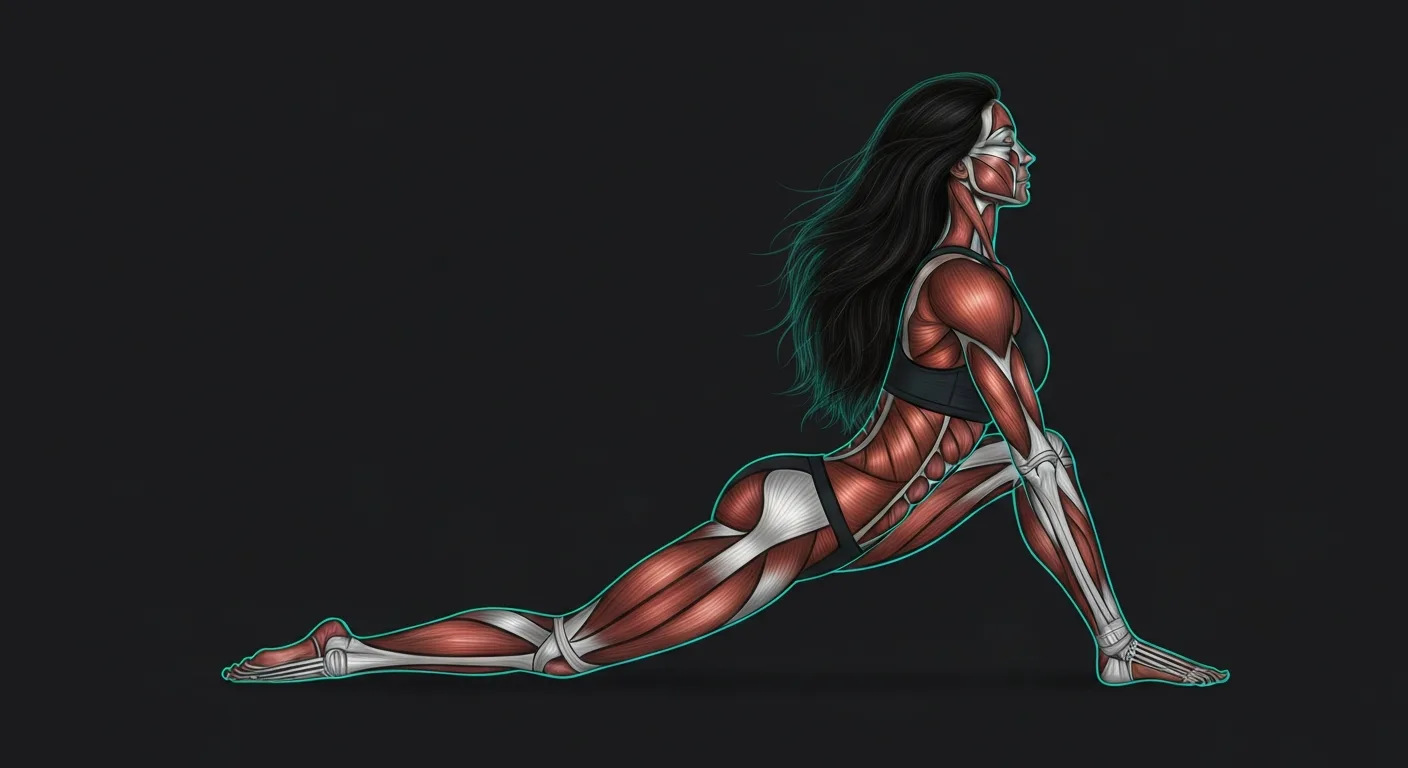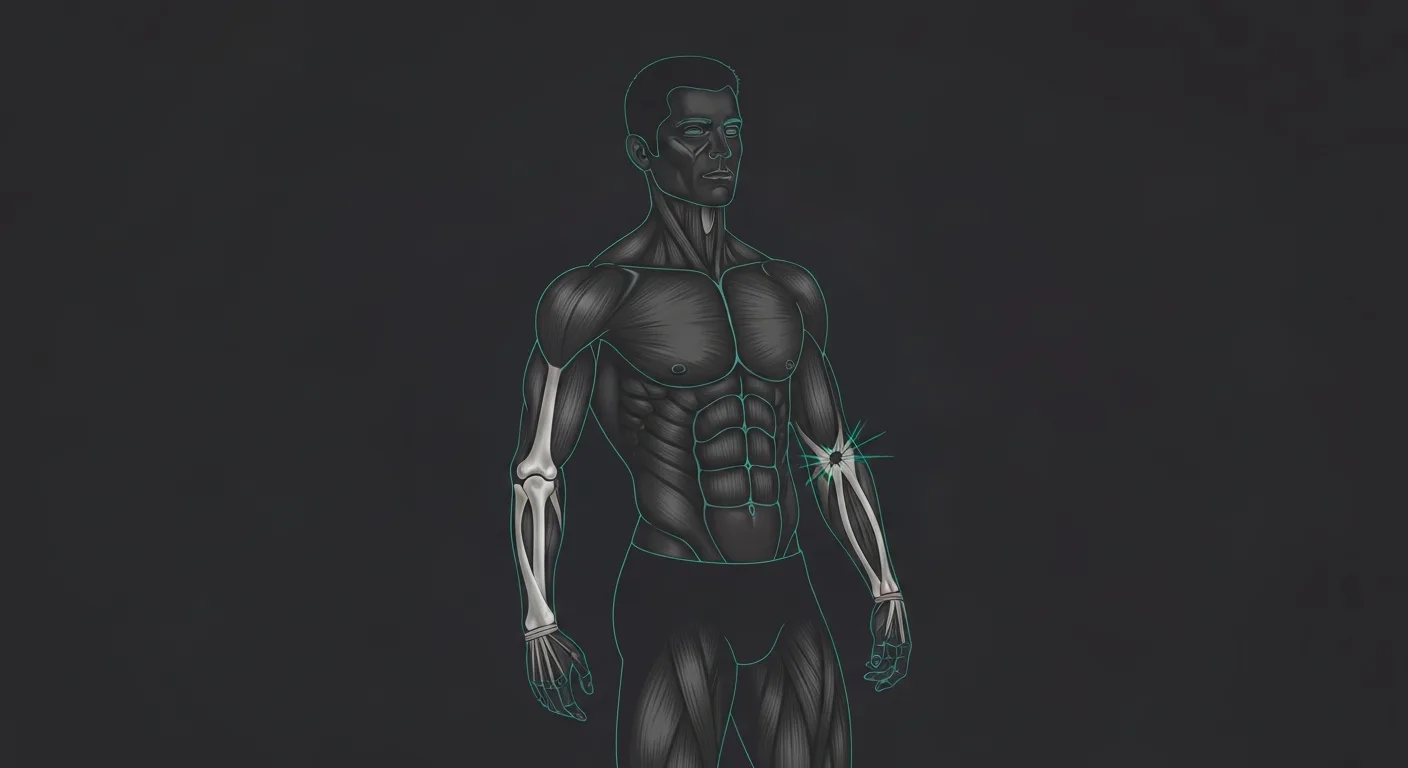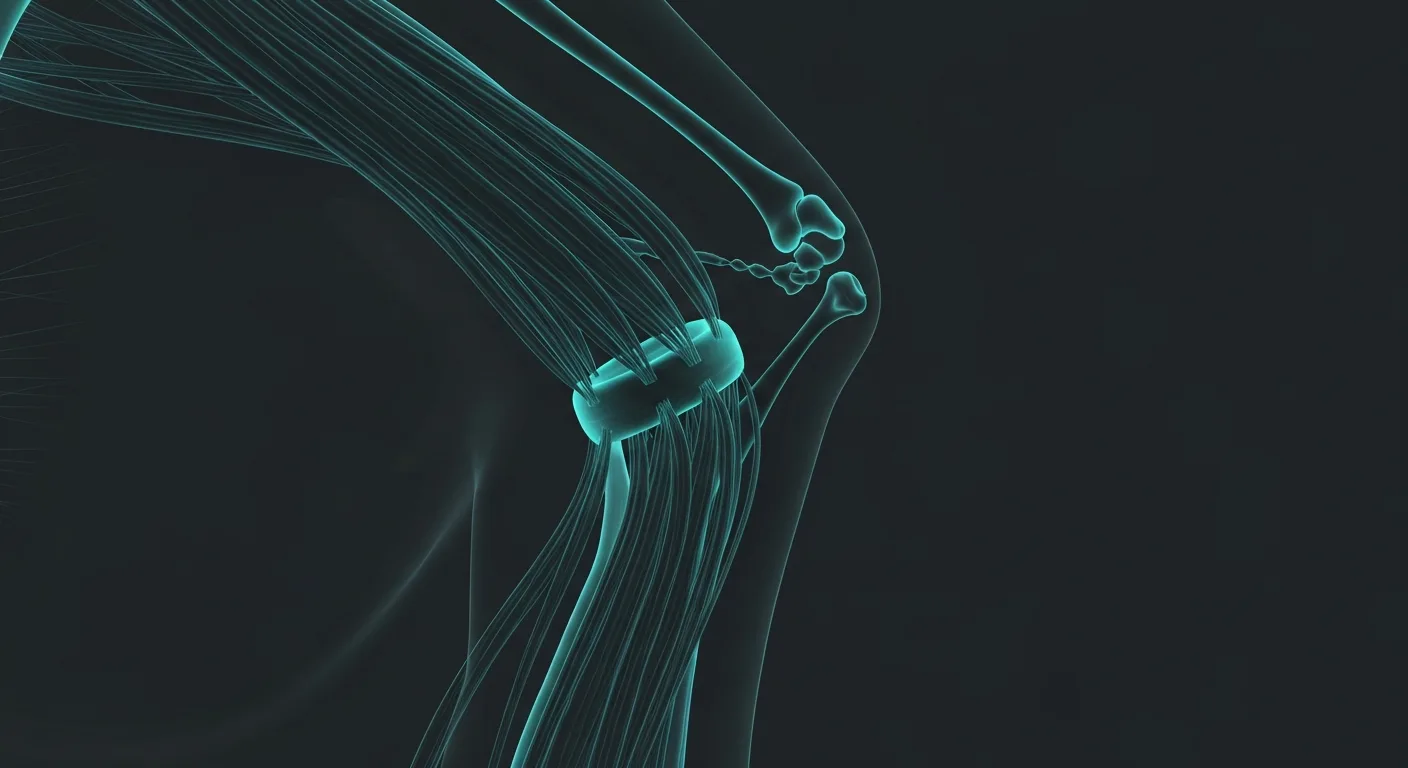
The tricep tendon is located at the back of your elbow, connecting the triceps brachii muscle to the olecranon — the bony tip of the ulna. It is one of the thickest tendons in the upper body and is responsible for transmitting the force your triceps generates every time you straighten your arm.
What Is the Tricep Tendon?
A tendon is dense connective tissue that links muscle to bone. The tricep has tendons at both ends. The distal tricep tendon — the one most people mean when they say "tricep tendon" — sits at the elbow. The proximal tendons anchor the three heads of the muscle to the shoulder blade and upper arm bone.
The distal tendon is a broad, flat band roughly 3 to 4 centimeters wide in most adults. It merges the fibers from all three heads of the triceps brachii into a single structure that inserts into the posterior surface of the olecranon process. A small bursa — a fluid-filled sac — sits between the tendon and the bone to reduce friction during movement.
Proximal Attachments: Where the Three Heads Begin
Each of the three heads of the tricep has its own proximal tendon:
- Long head — originates from the infraglenoid tubercle of the scapula (shoulder blade), just below the shoulder joint. Because it crosses the shoulder, it contributes to shoulder extension and adduction.
- Lateral head — originates from the posterior surface of the humerus, above and lateral to the radial groove. It is responsible for the visible "horseshoe" shape on the outer arm. Learn more about training it in our lateral head tricep exercises guide.
- Medial head — originates from the posterior surface of the humerus, below the radial groove. It sits deep to the other two heads and fires in nearly every elbow extension. See our medial head exercises guide for targeted training.
These proximal tendons are rarely injured in isolation. Most tricep tendon problems occur at the distal end, near the elbow.
Distal Tendon Anatomy: The Elbow Connection
The distal tricep tendon is the primary site of clinical concern. It funnels the combined contractile force of all three heads into a single attachment on the olecranon. During a heavy bench press lockout or a maximal push-up, this tendon may handle forces exceeding several hundred newtons.
The tendon's collagen fibers are arranged in parallel bundles, giving it high tensile strength along its length but making it vulnerable to shearing or sudden overload. Blood supply to the distal tendon is relatively poor compared to muscle tissue — one reason tendon injuries heal more slowly than muscle strains.
If you are experiencing persistent pain at this attachment point, it may be tricep tendonitis — an overuse condition that responds well to load management and targeted rehab.
What Does the Tricep Tendon Do?
The tendon serves as a force transmitter. When the triceps brachii contracts, the tendon pulls on the olecranon to extend (straighten) the elbow. This action powers everyday movements like pushing a door open, getting up from a chair, and throwing a ball. In the gym, it is active during every pressing and extension movement.
The tendon also acts as an energy storage mechanism during rapid movements. When you throw a punch or perform a fast push-up, elastic energy stored in the tendon's collagen matrix contributes to power output. This is why tendon health matters for athletic performance, not just injury prevention.
Common Tricep Tendon Injuries
Tricep Tendonitis
The most common tendon issue is tendonitis — inflammation and micro-damage caused by repetitive loading. It typically presents as a dull ache at the back of the elbow that worsens during tricep exercises like pushdowns, dips, or skull crushers. Overhead athletes and heavy bench pressers are at higher risk. A supportive tricep tendonitis brace can help manage symptoms during recovery.
Tendon Strain
A tricep strain involves acute tearing of tendon fibers. Grade 1 strains are mild with microscopic tearing. Grade 2 strains involve partial tearing with noticeable weakness. These usually result from sudden forceful contractions — for example, catching yourself during a fall or a failed heavy lockout.
Complete Rupture
A tricep tendon rupture is a full-thickness tear where the tendon detaches from the olecranon. This is the rarest of the three major arm tendon ruptures (behind biceps and pectoralis) but is the most serious. It almost always requires surgical repair. Symptoms include a popping sensation, immediate weakness, visible bruising, and the inability to fully straighten the elbow against resistance.
Olecranon Bursitis
While not a tendon injury per se, inflammation of the bursa between the tendon and the olecranon can mimic tendon pain. It causes a visible, soft swelling at the tip of the elbow. If your elbow hurts after tricep workouts, bursitis is one possible cause worth ruling out.
Risk Factors for Tricep Tendon Injury
Several factors increase your vulnerability to tendon problems:
- Age — tendon collagen stiffens and blood supply decreases after 35, raising injury risk.
- Sudden load increases — jumping from light tricep work to heavy close-grip bench or weighted dips without progressive overload.
- Anabolic steroid use — muscles grow faster than tendons can adapt, creating a mismatch in force tolerance.
- Fluoroquinolone antibiotics — medications like ciprofloxacin are associated with tendon weakening.
- Poor training form — hyperextending the elbow under load or using excessive momentum.
How to Keep Your Tricep Tendons Healthy
Tendon health is built through consistent, progressive loading — not rest alone. Research shows that tendons adapt to load over time, developing thicker collagen fibers and improved blood supply. Key strategies include:
- Increase training volume by no more than 10 to 15 percent per week.
- Include eccentric (lowering) movements like slow-tempo overhead tricep extensions — eccentric loading is one of the best-studied interventions for tendon health.
- Warm up with lighter sets before heavy pressing.
- Incorporate regular tricep stretches after training to maintain tissue length and elasticity.
- Address trigger points in the triceps to prevent compensatory loading patterns that stress the tendon.
The tricep tendon is a resilient structure when treated well. Most lifters will never experience a serious tendon injury if they manage load intelligently and respond to warning signs early. If you develop persistent elbow pain that does not resolve within a week or two of modified training, see an orthopedic provider or sports medicine physician for evaluation.
For a broader view of how the tricep tendon fits into overall arm anatomy, including its relationship to the biceps tendon and forearm structures, see our complete arm anatomy guide.