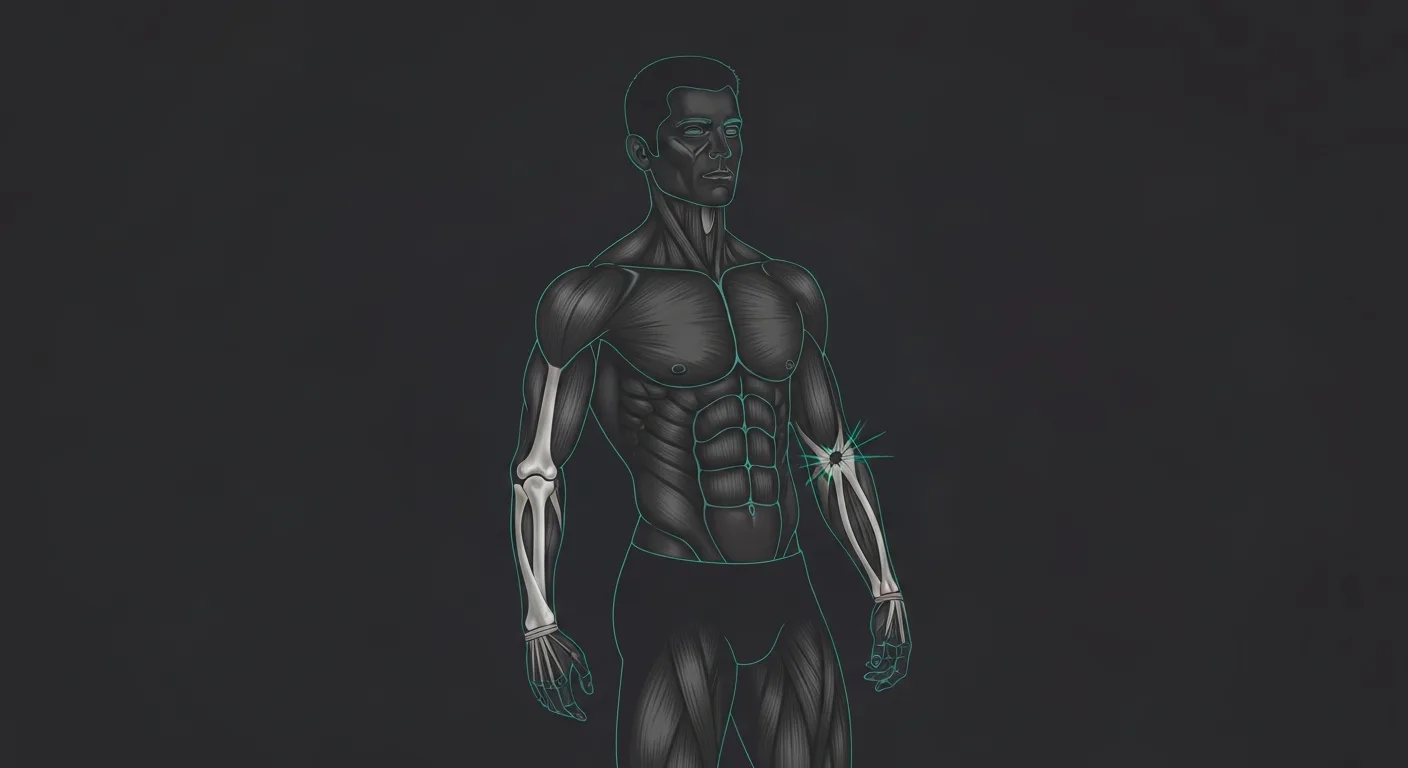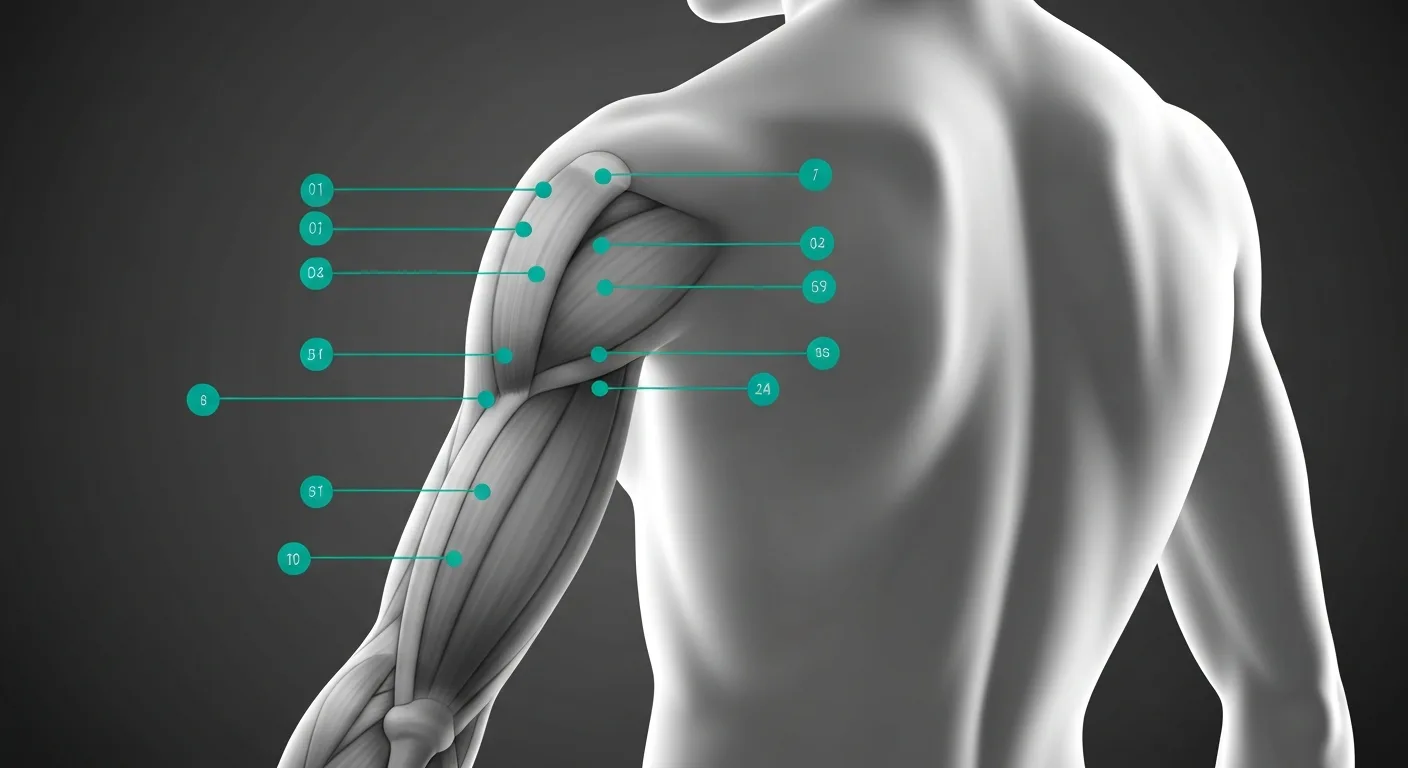
Tricep trigger points are hyperirritable knots in the triceps brachii that produce local tenderness and referred pain. The most common locations are the upper long head (near the armpit), the mid-lateral head (outer arm), and just above the elbow near the distal tendon. They are released through sustained pressure, stretching, and load management.
What Are Trigger Points?
Trigger points (also called myofascial trigger points) are palpable, tender nodules within taut bands of muscle. They form when muscle fibers contract and cannot release — becoming stuck in a shortened state. Pressing on a trigger point produces local pain and often "referred pain" — pain felt in a different location from where the trigger point is. They are not the same as muscle knots in the casual sense, though the terms are often used interchangeably.
In the triceps, trigger points are common because the muscle is heavily used in daily activities and training, often without adequate stretching or recovery. People who spend long hours at a desk with their arms extended (keyboard use) are particularly prone.
Trigger Point Locations and Referred Pain Patterns
Long Head Trigger Point
Located in the upper portion of the long head, near where the muscle meets the axilla (armpit area). This is the most common tricep trigger point. Its referred pain pattern extends down the back of the arm to the elbow and can radiate into the posterior shoulder. It is often mistaken for shoulder joint pathology or shoulder pain from weak triceps.
Lateral Head Trigger Point
Found in the mid-portion of the lateral head on the outer surface of the upper arm. Referred pain travels down the outer arm to the lateral elbow, sometimes mimicking lateral epicondylitis (tennis elbow). This trigger point develops commonly in people who do high-volume pushdowns and pressing.
Distal Trigger Point
Located in the lower portion of the triceps, just above the olecranon. Referred pain is felt at the elbow itself and can mimic tricep tendonitis or elbow pain from training. This point is easy to confuse with actual tendon pathology without careful assessment.
What Causes Tricep Trigger Points?
Trigger points develop from sustained or repetitive overuse without adequate recovery. Common causes include high-volume pressing and extension work in the gym, prolonged computer work with arms extended, sleeping with arms bent under the body or above the head, carrying heavy bags with the arm in a fixed position, guarding or splinting the arm after a strain or other injury, and sudden increases in training volume.
Direct trauma to the muscle (a blow to the arm) can also initiate a trigger point. Nutritional deficiencies — particularly in magnesium, vitamin D, and iron — may contribute to trigger point persistence.
How to Release Tricep Trigger Points
Self-Release with a Ball
The simplest self-treatment technique uses a lacrosse ball or firm massage ball against a wall:
- Stand with your back to a wall. Place the ball between the back of your upper arm and the wall at the trigger point location.
- Lean into the ball to apply firm but tolerable pressure. The discomfort should be "good pain" — noticeable but not sharp or unbearable. Aim for about a 7 out of 10 on your pain scale.
- Hold sustained pressure for 30 to 90 seconds until you feel the pain begin to diminish or the muscle starts to soften.
- While maintaining pressure, slowly flex and extend the elbow through a comfortable range. This pin-and-stretch technique helps the muscle fibers release.
- Repeat 2 to 3 times per spot. Treat each trigger point you find.
Perform self-release 3 to 5 times per week, especially before and after tricep training. Follow with gentle tricep stretches to reinforce the length gained from release.
Professional Treatment
If self-release is not sufficient, professional options include manual trigger point therapy (a trained therapist applies sustained pressure and works the tissue), dry needling (a thin needle is inserted directly into the trigger point, causing a local twitch response that releases the contraction), and instrument-assisted soft tissue mobilization (IASTM) using tools to break up adhesions and stimulate tissue remodeling.
Trigger Points vs. Other Causes of Tricep Pain
Trigger point pain can mimic other conditions. If pressing on the sore spot reproduces your pain and you feel a taut band in the muscle, it is likely a trigger point. If the pain is specifically at the tendon attachment at the elbow and worsens with resisted extension, it is more likely tendonitis. If pain started with a sudden event during exercise, consider a pull or tear. If pain is between the bicep and tricep rather than within either muscle, see our guide on pain between the bicep and tricep.
Trigger Point Massage Ball
Firm ball for self-release of tricep trigger points.
Why we suggest it: Right firmness for sustained pressure on myofascial trigger points.
Check Price on Amazon →As an Amazon Associate, we earn from qualifying purchases.
Prevention
Prevent trigger points from forming by managing training volume, incorporating regular stretching after exercise, taking breaks during prolonged desk work, and addressing postural issues. Using resistance bands for warm-up work before heavy tricep training helps prepare the muscle and reduce the likelihood of trigger point formation. Regular self-massage of the triceps, even without active trigger points, keeps the tissue healthy and pliable.
When to See a Provider
See a healthcare provider if self-treatment does not reduce symptoms within 2 to 3 weeks, the pain is interfering with sleep or daily activities, you have associated numbness or tingling (which may indicate nerve involvement rather than a trigger point), or the trigger point keeps returning despite addressing training and lifestyle factors. A physical therapist or qualified manual therapist can provide a thorough assessment and targeted treatment.