Elbow pain from tricep workouts is most commonly caused by tricep tendonitis — inflammation of the distal tricep tendon at the elbow. Other frequent causes include excessive extension volume, poor lockout mechanics, and inadequate warm-up. The fix usually involves modifying your training, not stopping it.
Why Your Elbows Hurt During Tricep Work
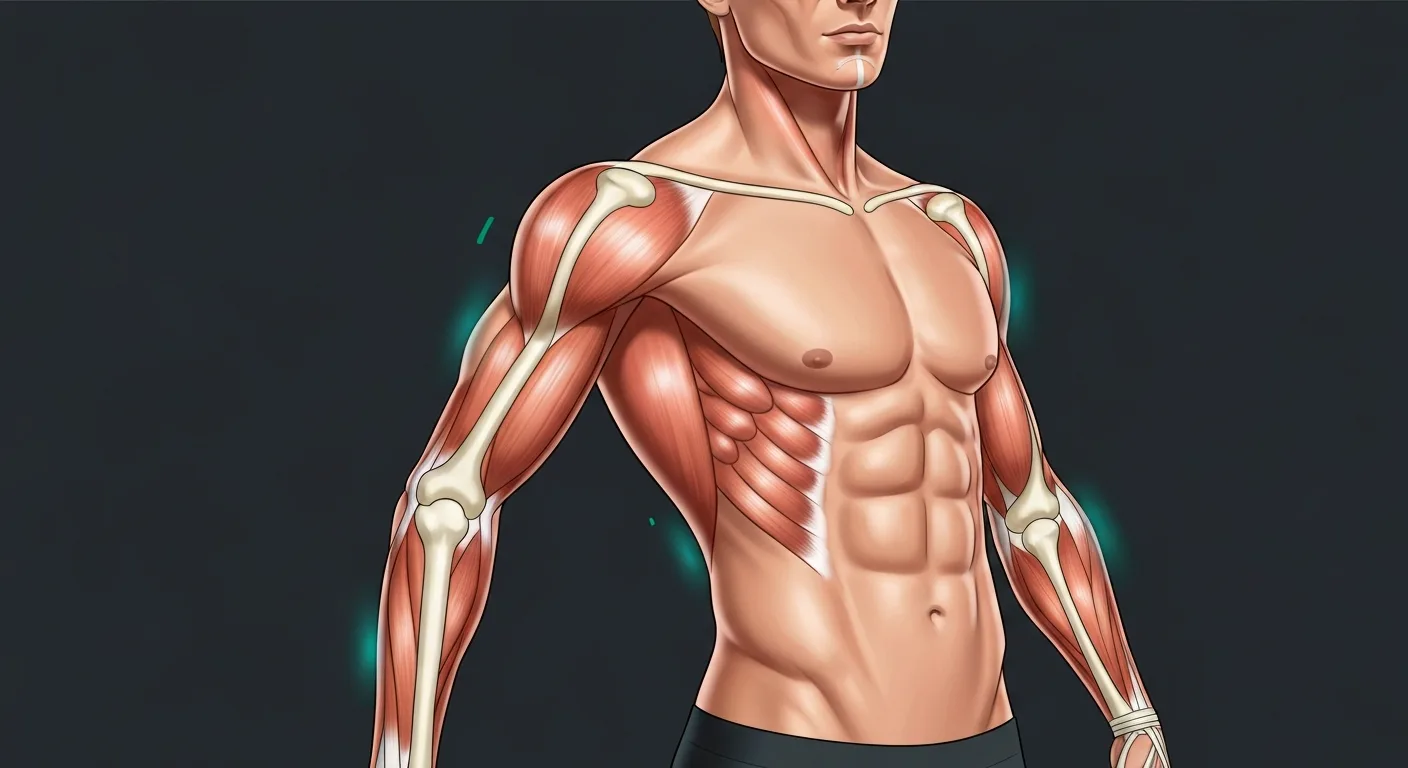
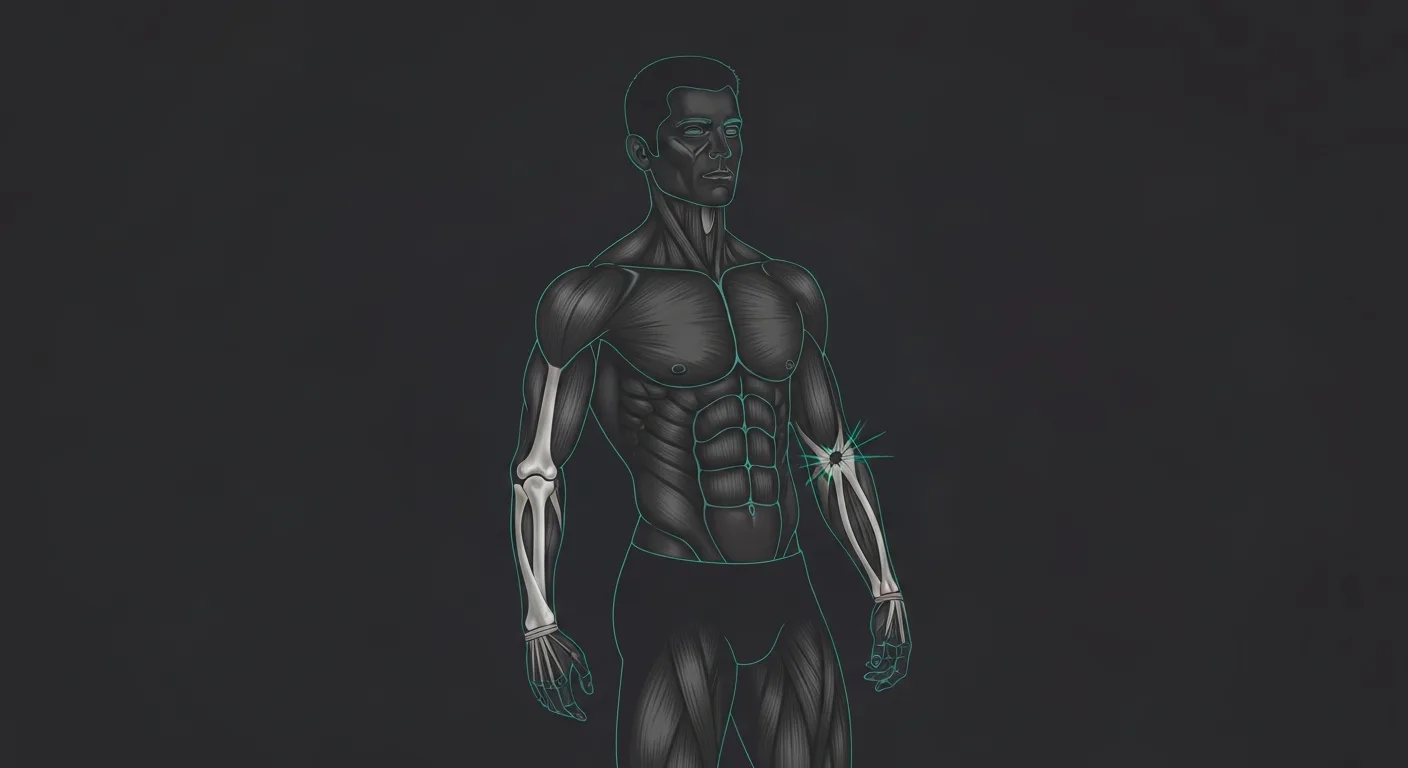
The triceps brachii attaches to the olecranon — the bony point of the elbow — via its distal tendon. Every time you extend your elbow against resistance, this tendon absorbs significant force. When the cumulative load exceeds the tendon's ability to recover between sessions, irritation and inflammation develop.
This is fundamentally a load management problem. The elbow itself is fine — it is the relationship between how much work you are doing and how much the tendon can tolerate that has broken down.
The Most Common Causes
Tricep Tendonitis
The leading cause of posterior elbow pain in lifters. Tricep tendonitis presents as a dull ache at the back of the elbow that worsens during and after training. It develops gradually — most people cannot pinpoint when it started. If you have been training through mild elbow discomfort for weeks, tendonitis is the most likely diagnosis.
Excessive Extension Volume
High total sets of direct tricep extension work — pushdowns, skull crushers, overhead extensions, kickbacks — create enormous cumulative stress on the distal tendon. Compound pressing (bench, overhead press) already loads the triceps significantly, so the total weekly volume may be higher than you realize. See our guide on how many sets per week for triceps to check whether your volume is excessive.
Full Lockout Under Heavy Load
Exercises that place maximum load at full elbow extension — skull crushers, heavy close-grip bench press, and weighted dips — create peak stress on the tendon exactly where it is most vulnerable. This does not mean these exercises are bad, but they demand more recovery than moderate-range movements.
Poor Form and Flaring Elbows
Letting the elbows flare or drift during pushdowns and extensions shifts stress from the muscle belly to the tendon and surrounding structures. Controlled elbow position throughout each rep reduces unnecessary joint stress. Poor form is especially problematic on single-arm pushdowns where compensatory rotation can occur.
Insufficient Warm-Up
Jumping into heavy tricep work without progressive warm-up sets loads cold tendons at high intensity. Two to three progressively heavier warm-up sets before working weight is the minimum for tricep-dominant exercises.
Is It Tendonitis or Something Else?
Pain at the back of the elbow (posterior) that worsens with extension = most likely tricep tendonitis.
Pain at the outside of the elbow (lateral) = may be lateral epicondylitis (tennis elbow), which involves the wrist extensors, not the triceps.
Pain at the inside of the elbow (medial) = may be medial epicondylitis (golfer's elbow), involving the wrist flexors.
Swelling or squishy bump at the tip = may be olecranon bursitis (fluid-filled sac inflammation), which requires different management.
Sharp pain radiating up the arm during a single rep = possible strain or trigger point referral.
How to Fix It
Exercise Modifications
Swap high-stress exercises for lower-stress alternatives while maintaining training stimulus:
| Aggravating Exercise | Elbow-Friendly Alternative |
|---|---|
| Skull crushers | Cable overhead extension |
| Heavy weighted dips | Bodyweight dips or machine dips |
| Close-grip bench (heavy) | Close-grip bench at moderate weight |
| Heavy pushdowns | Band pushdowns |
Resistance bands are particularly elbow-friendly because the resistance curve is lowest at full extension (where the tendon is most stressed) and highest at contraction (where the muscle handles load best).
Volume Management
Reduce total weekly tricep volume by 30 to 50 percent. Count all pressing sets as partial tricep work — if you do 12 sets of bench and overhead press plus 9 sets of direct tricep work, that is 21 effective tricep sets per week, which is likely excessive if your elbows hurt.
Proper Warm-Up Protocol
Before any tricep-heavy session: 5 minutes of general upper body movement (arm circles, band pull-aparts), then 2 to 3 warm-up sets at 30 percent, 50 percent, and 70 percent of working weight before your first working set. This applies to both pressing and isolation work.
Eccentric Loading for Tendon Health
Slow eccentric exercises — 4 to 5 second lowering phases — are the most evidence-backed intervention for tendon pain. Perform 3 sets of 12 to 15 slow eccentrics on cable pushdowns using light to moderate weight, 3 times per week. This stimulates tendon remodeling without excessive peak load.
Elbow Compression Sleeve
Compression support for elbow pain during workouts.
Why we suggest it: Warmth and mild compression reduce posterior elbow pain during training.
Check Price on Amazon →As an Amazon Associate, we earn from qualifying purchases.
Long-Term Prevention
Once your elbows feel better, prevent recurrence by keeping total tricep volume reasonable (10 to 15 direct sets per week for most people), warming up thoroughly, rotating between different extension exercises rather than hammering the same movement every session, including tricep stretches after every session, and periodically deloading (reducing volume and intensity for a week every 4 to 6 weeks). Understanding which movements hit each head of the tricep allows you to distribute stress more evenly across the muscle.
When to See a Doctor
Seek medical evaluation if elbow pain persists despite 3 to 4 weeks of modified training, you hear or feel clicking, locking, or catching in the elbow, the joint is visibly swollen or warm, pain radiates into the forearm or hand, or you cannot fully straighten or bend the arm. Persistent elbow pain deserves imaging and a proper diagnosis, especially to rule out tendon damage or structural issues that require different management than simple tendonitis.