Tricep muscle pain is most commonly caused by delayed-onset muscle soreness (DOMS), overuse, or a minor strain. Less common causes include nerve compression, tendonitis, trigger points, and referred pain from the cervical spine. Most tricep pain resolves within 1 to 2 weeks with rest and basic self-care.
Common Causes of Tricep Pain
Delayed-Onset Muscle Soreness (DOMS)
The most frequent cause of tricep pain in active people is DOMS — the deep, aching soreness that peaks 24 to 72 hours after exercise. It results from microscopic damage to muscle fibers during unfamiliar or intense activity, especially exercises with a strong eccentric (lowering) component like skull crushers or overhead extensions.
DOMS is not an injury. It is a normal part of the muscle adaptation process. It resolves on its own within 3 to 5 days and becomes less severe as the muscle adapts to the training stimulus.
Overuse and Repetitive Strain
Repetitive tricep loading — from excessive pressing volume, manual labor, or even prolonged desk work — can produce chronic, low-grade pain. The triceps brachii is active during many daily movements, and overuse can lead to microtrauma that accumulates faster than the tissue can repair.
If you notice that your triceps are consistently sore even without recent heavy training, consider whether your overall weekly volume is too high. Our guide on how many sets per week can help you find the right balance.
Muscle Strains
A tricep strain involves actual tearing of muscle fibers, ranging from mild (grade 1) to complete rupture (grade 3). Unlike DOMS, a strain typically occurs during a single event — a sudden sharp pain during a heavy lift, a fall, or an explosive movement. If you suspect a strain beyond grade 1, see our detailed guide on torn tricep symptoms and recovery.
Tendonitis
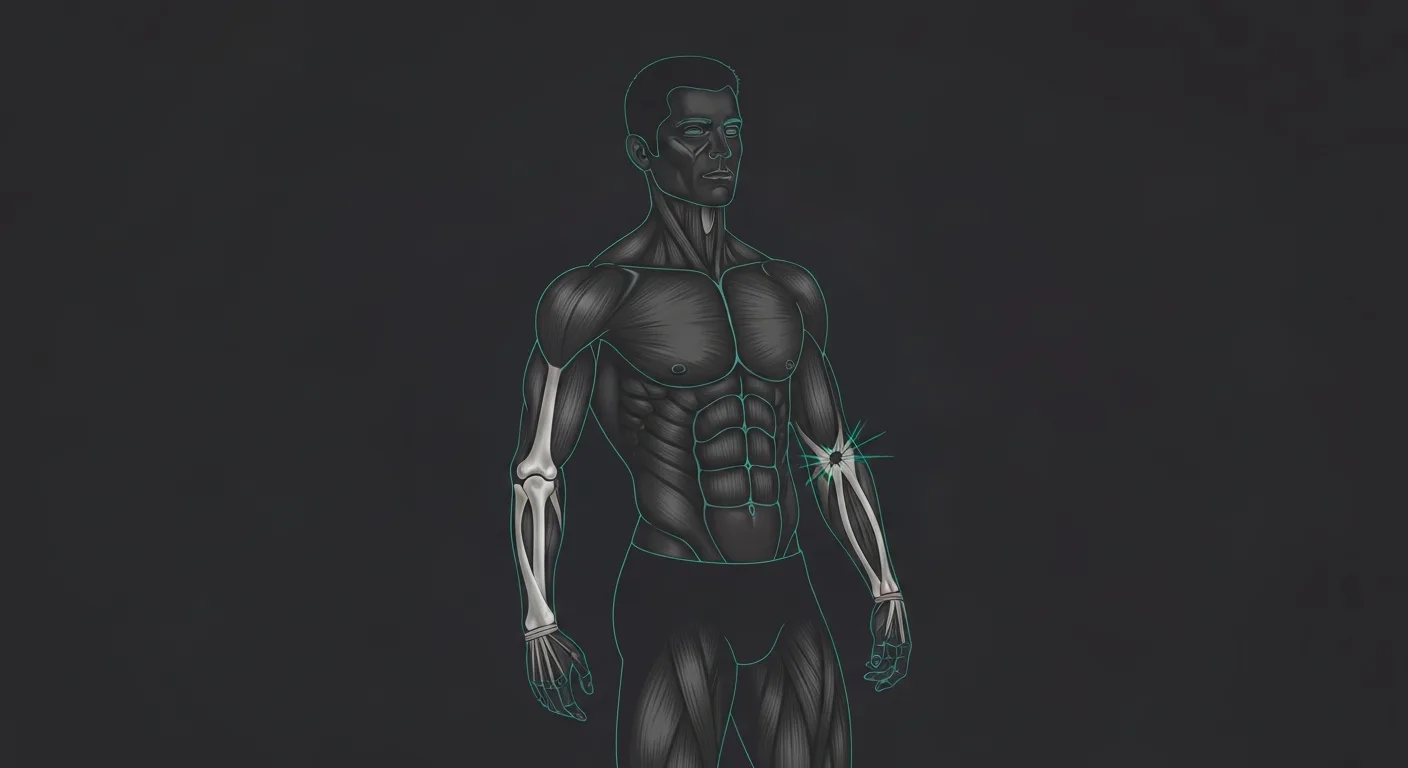
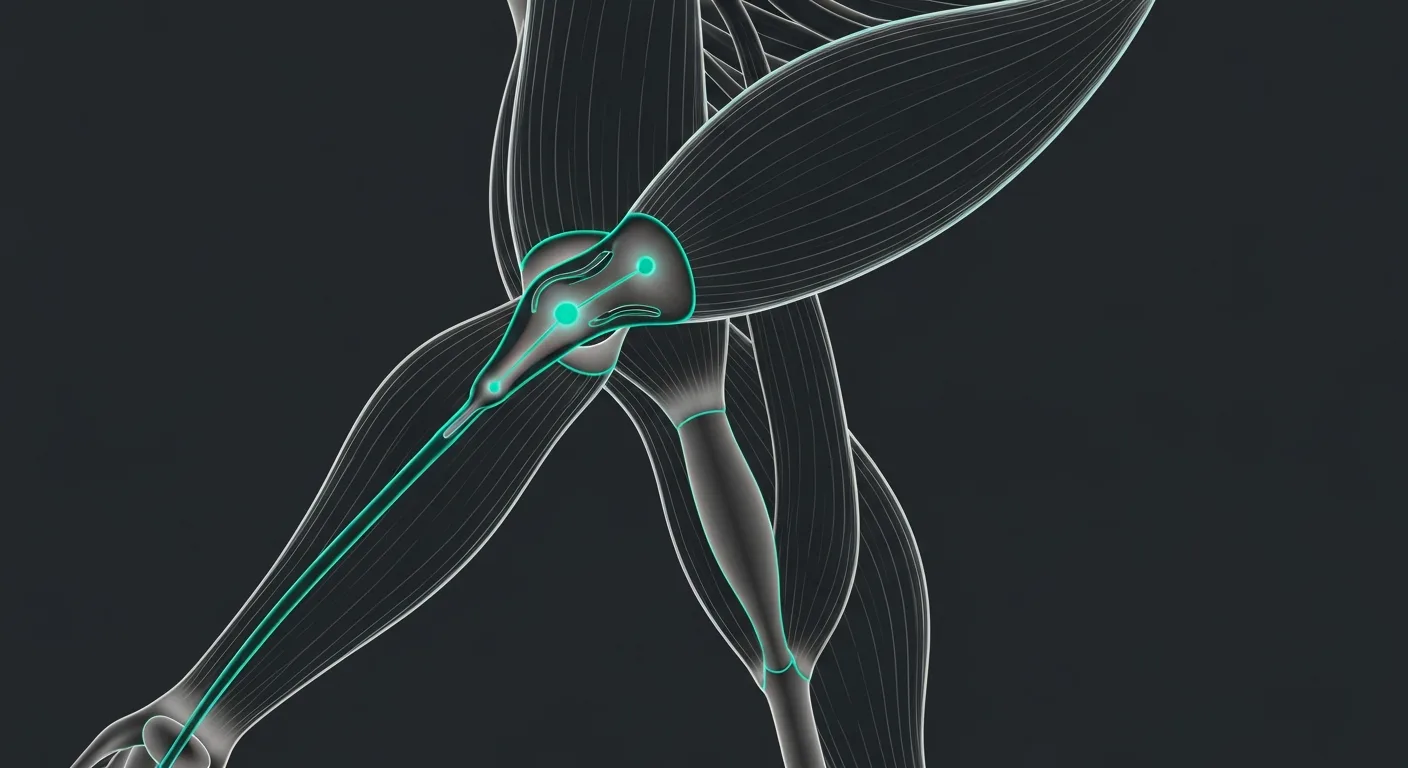
Tricep tendonitis is inflammation of the distal tricep tendon at the elbow. It presents as a dull ache at the back of the elbow that worsens with extension movements. It is an overuse condition, most common in lifters who do high-volume pressing and extension work without adequate recovery. A tendonitis brace can help offload the tendon during recovery.
Trigger Points
Tricep trigger points are hyperirritable knots within the muscle that produce localized and referred pain. They are common in the long head and lateral head and can cause aching in the back of the arm, the elbow, or even the shoulder. Trigger points often develop from sustained postures, overuse, or after injury.
Nerve Compression
The radial nerve runs through a groove on the back of the humerus in direct contact with the triceps brachii. Compression of this nerve — from sleeping on the arm, prolonged pressure, or a humeral fracture — can cause tricep weakness and pain.
Cervical radiculopathy at the C7 nerve root can also produce pain that radiates down the back of the arm into the tricep. This type of referred pain may occur without any local arm injury.
Referred Pain and Other Causes
Pain felt in the tricep area can originate elsewhere. Shoulder problems can produce pain that radiates into the upper arm. Pain between the bicep and tricep may indicate a nerve issue in the intermuscular septum rather than a muscle problem.
Sharp Pain vs. Dull Ache: What It Means
Sharp pain during activity usually indicates an acute injury — a strain, a tendon issue, or nerve irritation. It demands immediate attention: stop the activity and assess.
Dull, aching pain that develops gradually is more consistent with DOMS, overuse, trigger points, or chronic tendonitis. This type of pain is less urgent but should not be ignored if it persists beyond two weeks.
Burning or tingling pain with weakness suggests nerve involvement. This pattern warrants medical evaluation, especially if it radiates into the forearm or hand.
How to Relieve Tricep Muscle Pain
Acute Pain Relief
- Rest — avoid activities that reproduce the pain. Modified activity is better than complete immobilization.
- Ice — apply for 15 to 20 minutes every 2 to 3 hours during the first 48 hours.
- Over-the-counter anti-inflammatories — ibuprofen or naproxen can reduce pain and swelling when used as directed.
- Gentle range of motion — keep the arm moving through pain-free ranges to prevent stiffness.
Chronic Pain Management
- Stretching — regular overhead tricep stretches and cross-body stretches maintain tissue length.
- Self-massage and trigger point release — use a lacrosse ball or foam roller on the back of the upper arm.
- Eccentric strengthening — slow, controlled lowering movements strengthen the muscle-tendon unit and are one of the best-studied interventions for chronic pain.
- Load management — adjust training volume and intensity. Consider reducing pressing frequency or switching to lower-stress exercises like resistance band work.
Preventing Tricep Pain
Most tricep pain is preventable with smart training practices: warm up before heavy work, progress loads gradually, balance pushing and pulling volume, include direct tricep stretching after training, and do not ignore early warning signs like persistent tenderness or elbow discomfort.
If your triceps feel disproportionately sore or weak relative to your training, see our guide on why triceps feel weak for potential causes and fixes.
When to See a Doctor
See a healthcare provider if you felt a pop or snap during an activity, cannot extend your arm against resistance, have visible bruising or swelling that worsens after 48 hours, experience pain that radiates into your hand or fingers, the pain wakes you from sleep, or symptoms have not improved after two weeks of self-care. While most tricep pain is musculoskeletal and resolves with conservative management, persistent or worsening symptoms deserve professional evaluation to rule out tears, nerve issues, or other conditions.