Yes, weak triceps can contribute to shoulder pain. The long head of the triceps crosses the shoulder joint and assists with shoulder extension and stability. When the triceps are weak, the shoulder must compensate during pressing movements, increasing joint stress and the risk of impingement, rotator cuff overload, and anterior shoulder pain.
How the Triceps and Shoulder Are Connected
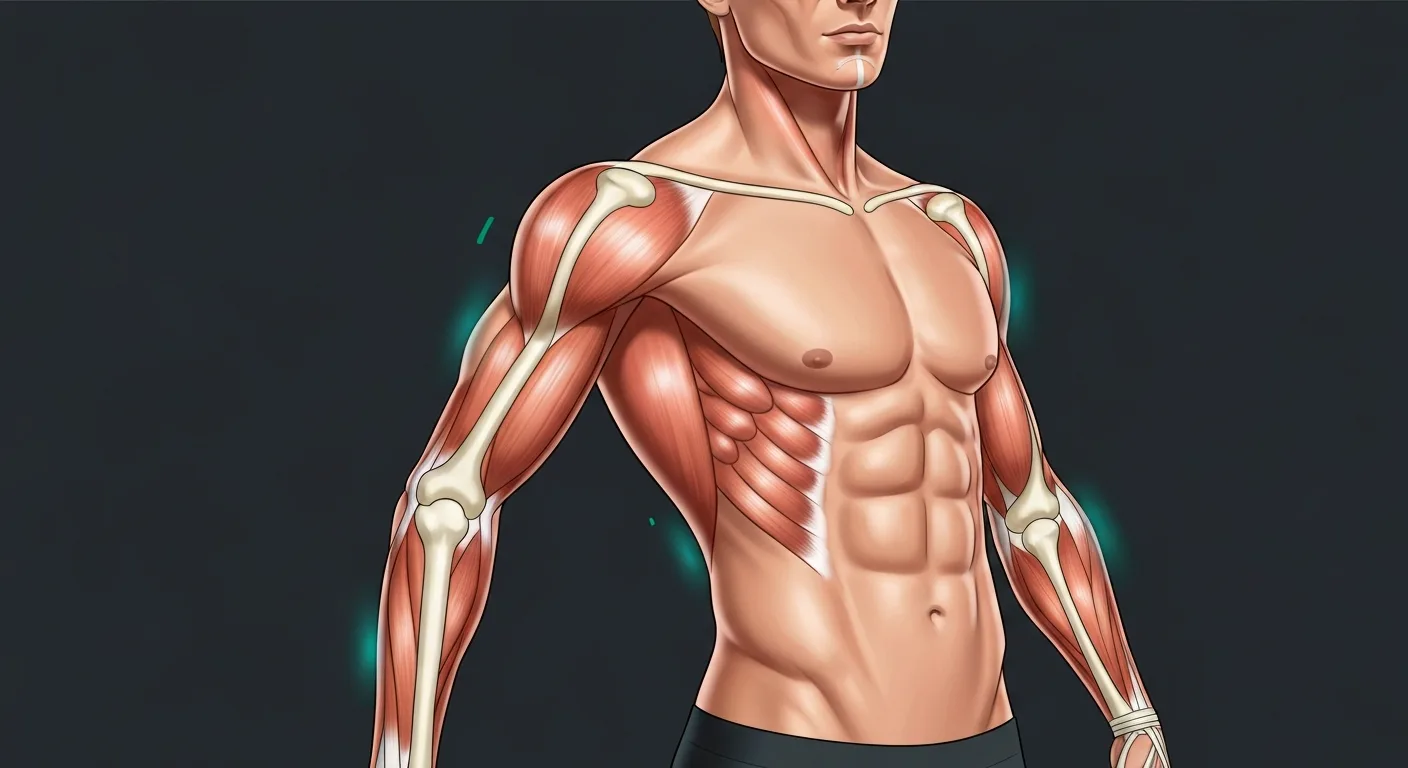
Unlike the lateral and medial heads, the long head of the triceps originates from the infraglenoid tubercle of the scapula — meaning it is the only head that crosses the shoulder joint. This gives the long head a dual role: it extends the elbow and assists with shoulder extension (pulling the arm backward) and adduction (pulling the arm toward the body).
This anatomical connection means the long head contributes to dynamic shoulder stability, particularly during overhead movements and pressing. When it is weak or inhibited, the shoulder joint loses a stabilizing force, and other muscles — particularly the rotator cuff and deltoids — must pick up the slack.
How Weak Triceps Lead to Shoulder Pain
Pressing Compensation
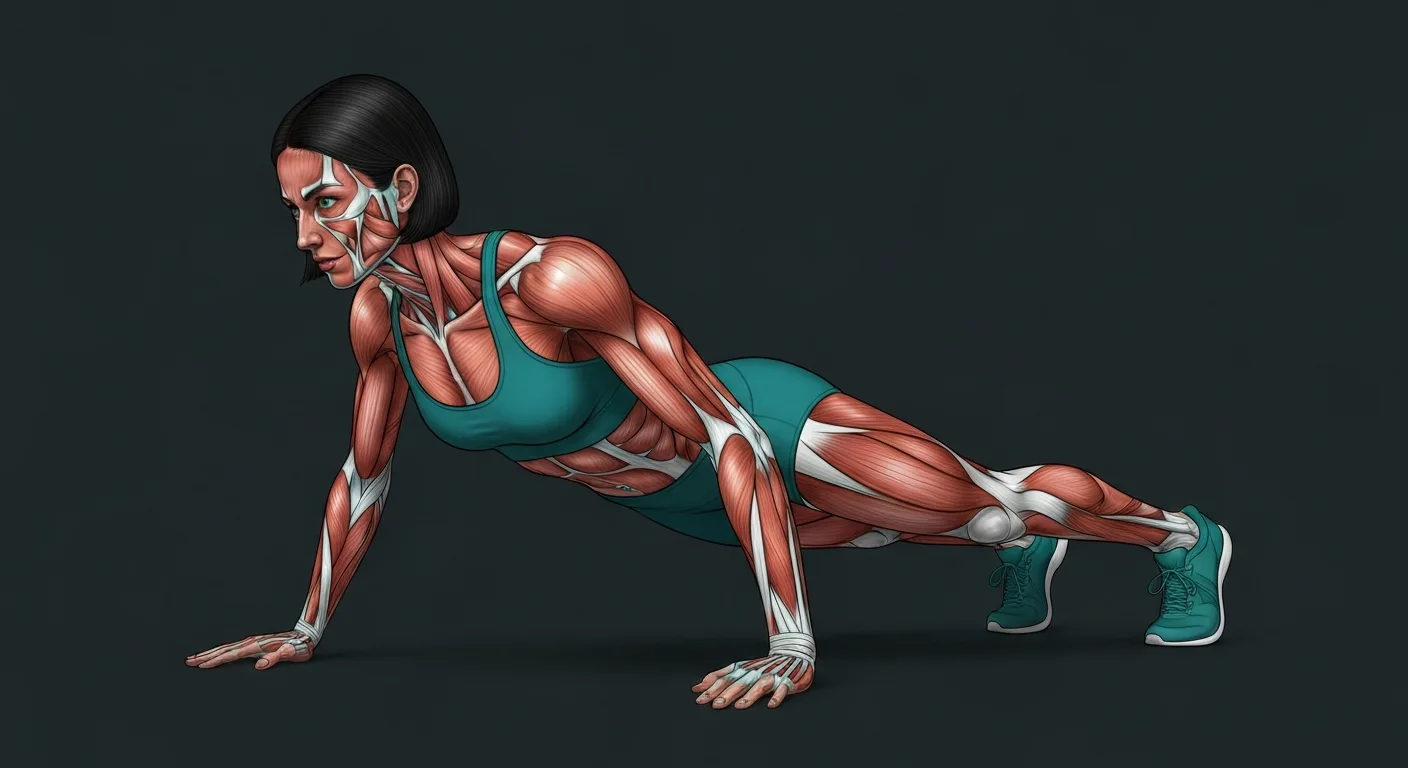
During pressing movements like bench press and overhead press, the triceps are responsible for the lockout phase — the final third of the range of motion. When the triceps are too weak to complete lockout efficiently, the shoulder compensates by internally rotating, shrugging, or flaring to recruit other muscle groups. These compensatory patterns increase stress on the anterior shoulder capsule and rotator cuff.
This is why people with weak triceps often report shoulder pain during pressing but blame it on the shoulder itself. Strengthening the lockout with tricep-focused bench press work can reduce shoulder compensation.
Long Head Stability Loss
The long head of the triceps acts as a dynamic stabilizer of the glenohumeral (shoulder) joint, particularly during overhead movements. When it is weak or deconditioned, the humeral head (ball of the shoulder joint) may migrate superiorly (upward), reducing the subacromial space and contributing to impingement — a condition where the rotator cuff tendons get pinched during arm elevation.
Trigger Point Referral
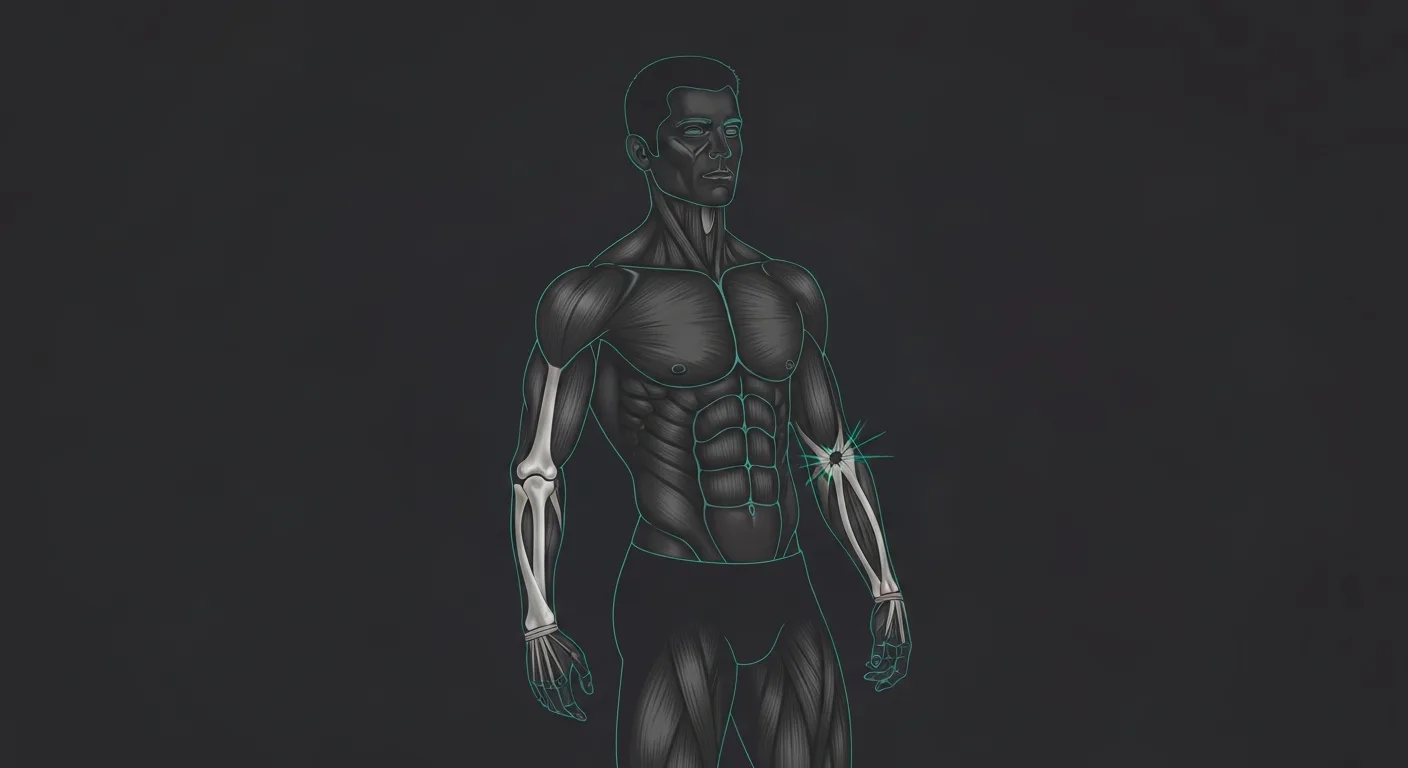
Trigger points in the long head of the triceps commonly refer pain to the posterior shoulder and even mimic rotator cuff or shoulder joint pathology. A tight, overworked long head — often from compensating for overall tricep weakness — can develop trigger points that produce shoulder-area pain without any actual shoulder pathology.
Pain Patterns to Watch For
Anterior shoulder pain during lockout — suggests the shoulder is compensating for weak tricep lockout strength. Strengthening the triceps for pressing may help.
Posterior shoulder ache that worsens with arm overhead activities — may indicate long head weakness or trigger point referral. Test by pressing firmly on the long head (upper-inner arm near the armpit): if pressing reproduces or changes the shoulder pain, the tricep is likely involved.
Tricep pain when lifting the arm — usually involves the long head proximal attachment. Could be a mild strain, tendinopathy, or irritation at the glenoid. If it persists, get it evaluated.
What to Do About It
Step 1: Assess Your Tricep Strength
Compare your tricep strength to benchmarks. If your pushdown or extension strength is disproportionately low relative to your pressing strength, your triceps may be undertrained. The triceps should be significantly stronger than the biceps — if the imbalance is narrow, tricep weakness is likely.
Step 2: Strengthen the Long Head
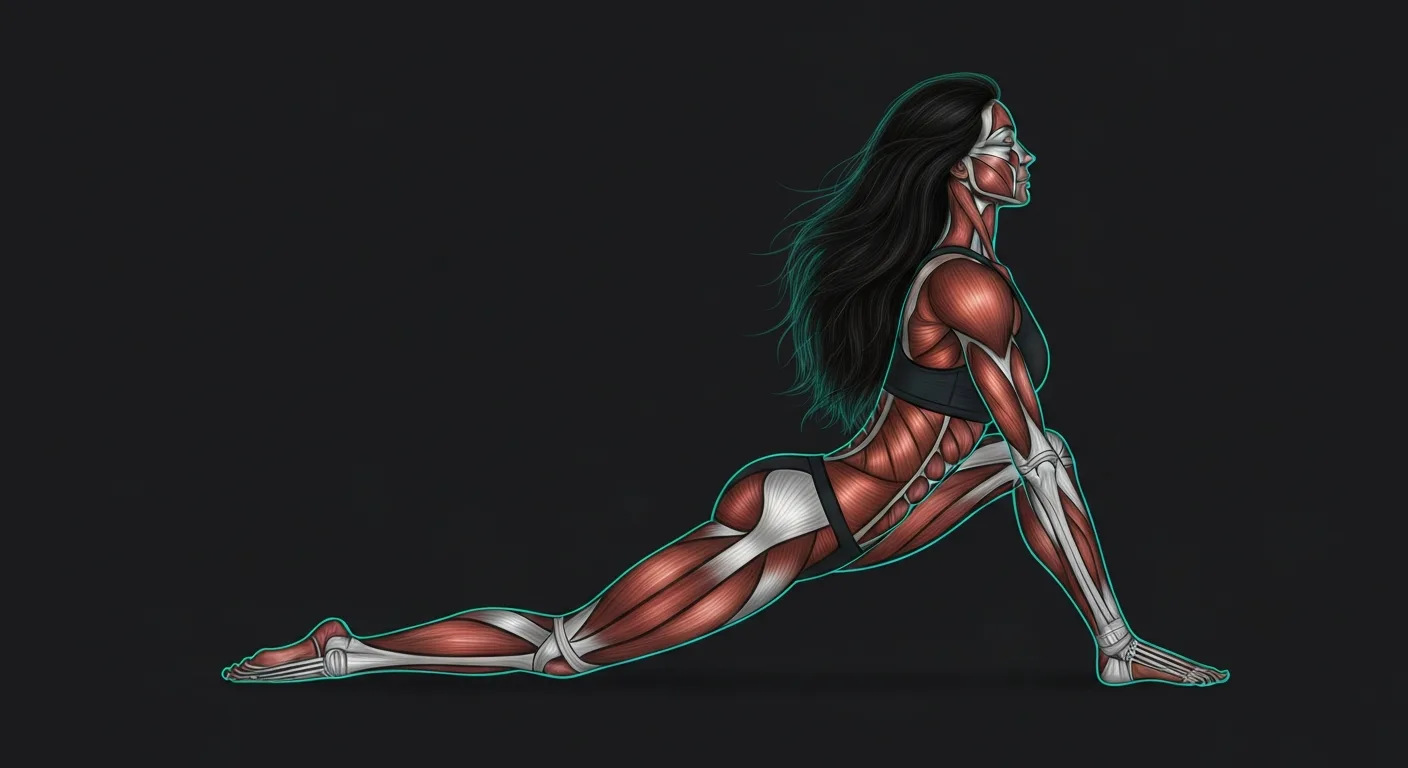
The long head is best targeted with exercises where the arm is overhead or behind the body — positions that put it on stretch. Effective exercises include overhead dumbbell and cable extensions, incline dumbbell extensions, and resistance band overhead work. Start with moderate loads, higher reps (12 to 15), and focus on controlled eccentrics.
Step 3: Fix Pressing Mechanics
Ensure proper form on pressing movements — retracted scapulae, controlled descent, and a strong lockout driven by the triceps rather than shoulder compensation. If your bench press stalls at lockout, it is a tricep weakness problem. Train the lockout specifically with board presses, floor presses, or pause-and-press variations.
Step 4: Address Trigger Points
If you have trigger points in the long head contributing to shoulder pain, address them with self-release techniques and follow up with stretching.
When It Is Not the Triceps
Not all shoulder pain is related to the triceps. If your shoulder pain is accompanied by catching, clicking, or locking, it may indicate a labral tear or rotator cuff issue. If pain is primarily during rotation (internal or external), it is more likely a rotator cuff problem. If you have shoulder pain without any pressing or tricep involvement, the triceps are probably not the cause.
When tricep strengthening and trigger point release do not improve shoulder symptoms within 4 to 6 weeks, see a healthcare provider for a thorough shoulder evaluation.
When to See a Doctor
See a doctor if shoulder pain is severe or sudden-onset, you cannot lift the arm above shoulder height, there is visible swelling or deformity, pain does not improve with 4 to 6 weeks of tricep strengthening and stretching, or the pain wakes you at night. While weak triceps can contribute to shoulder issues, persistent shoulder pain should always be evaluated to rule out structural problems.