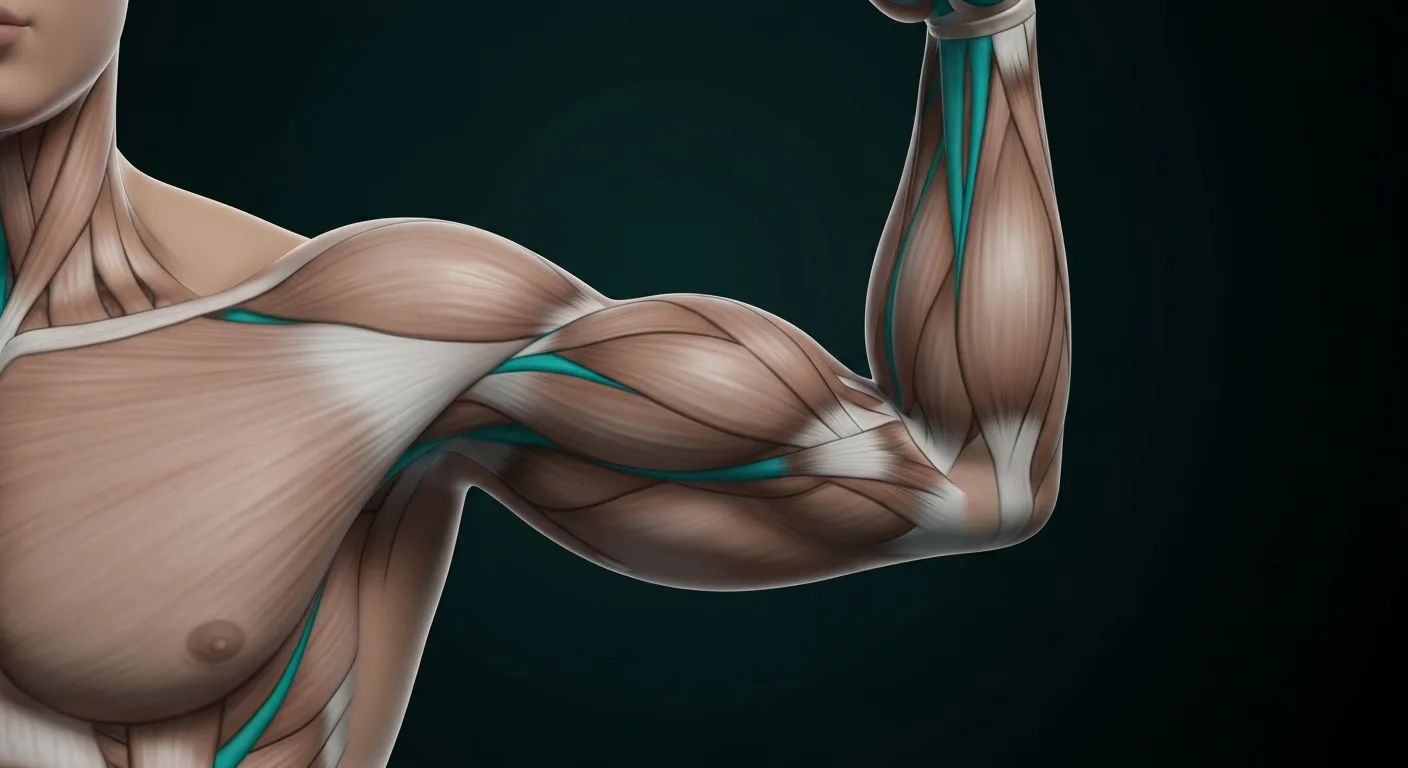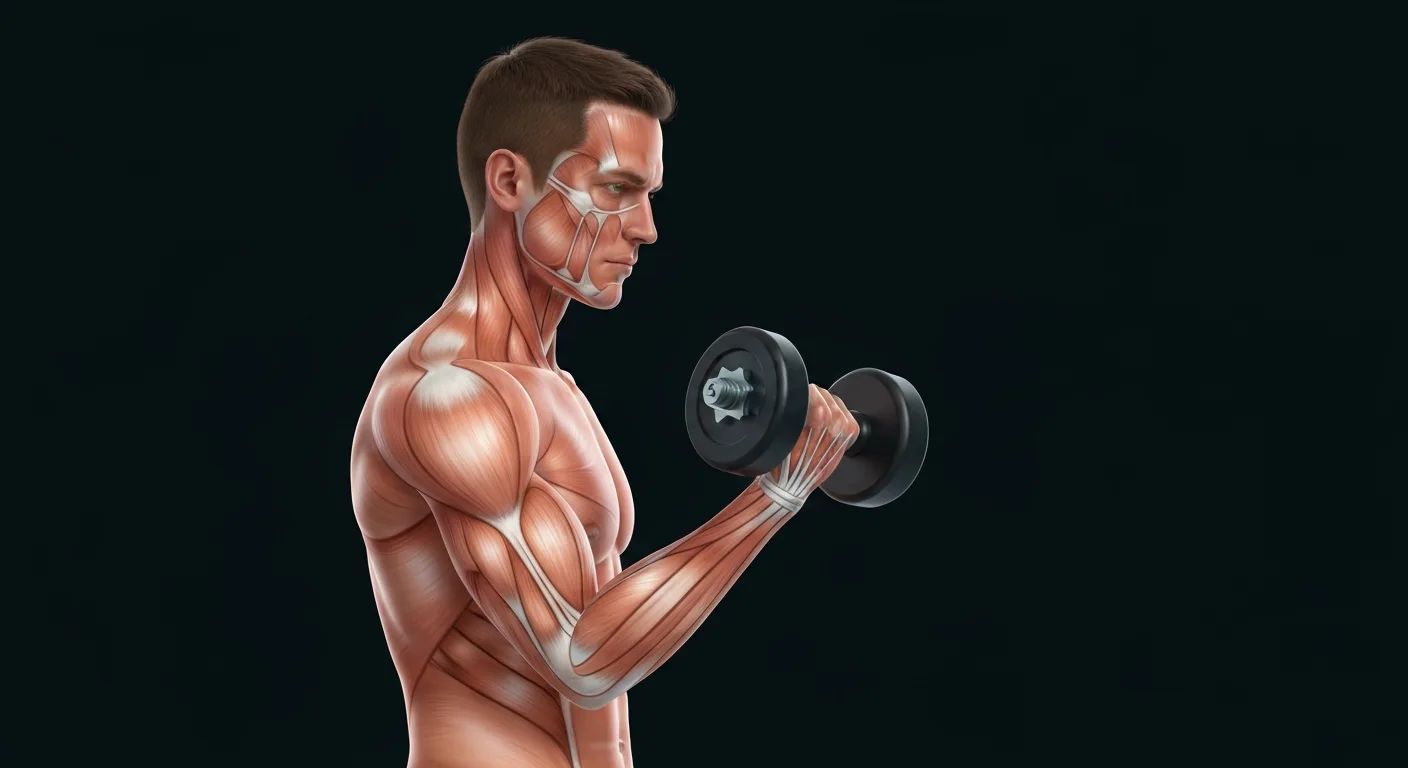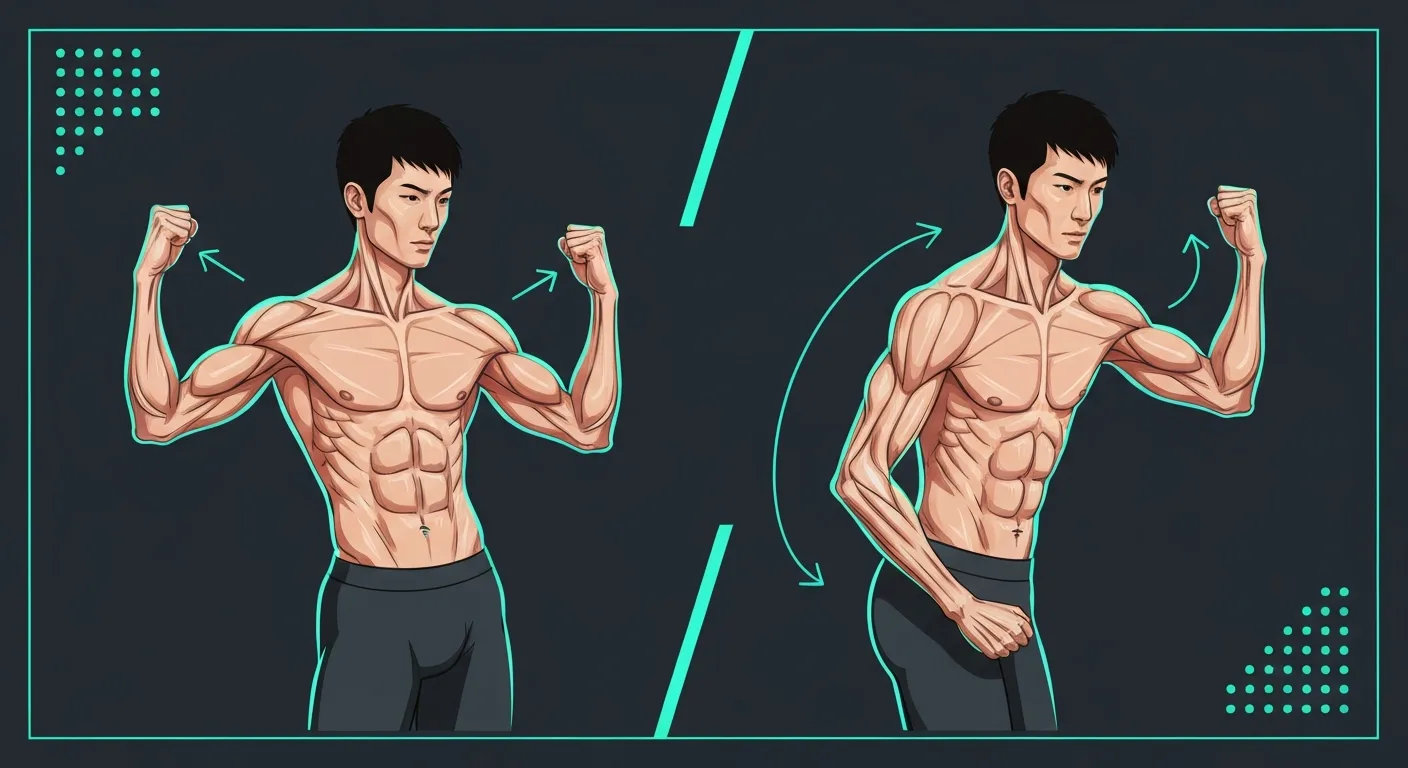
Yes — the triceps are significantly stronger than the biceps. The triceps brachii makes up roughly two-thirds of your total upper arm mass and can generate more peak force than the biceps during its primary action, elbow extension.
Size: Triceps vs. Biceps
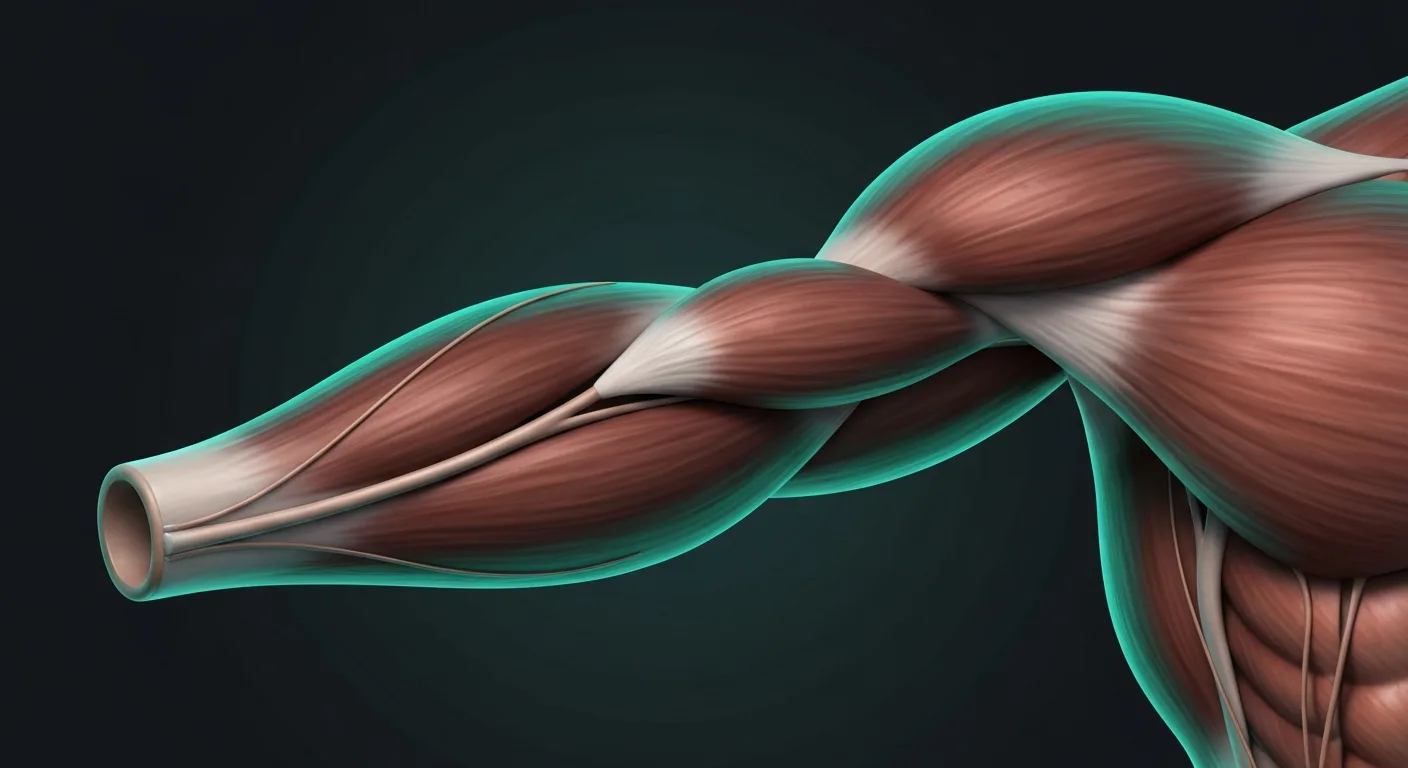
The triceps occupy approximately 55 to 65 percent of the upper arm's cross-sectional area, depending on the individual. The biceps brachii, despite being the more famous muscle, takes up only about 35 to 45 percent. This is because the triceps have three distinct heads — the long head, lateral head, and medial head — while the biceps have only two.
If you want bigger arms, prioritizing tricep development is the most efficient path. Adding even a small amount of size to the triceps creates a more visible change in overall arm appearance than the same amount added to the biceps.
Strength: How Much More Force Can the Triceps Produce?
Isometric strength testing research shows the elbow extensors (primarily the triceps) can generate roughly 20 to 30 percent more force than the elbow flexors (primarily the biceps and brachialis). The exact ratio varies by elbow angle and individual anatomy, but the triceps consistently come out ahead.
This makes sense from a functional standpoint. Pushing movements — which rely on the triceps — tend to involve heavier loads than pulling movements. A typical lifter can bench press or push more weight than they can curl. The triceps are built for higher force output because they have greater total muscle mass and a mechanical advantage during extension.
Why Are the Triceps Stronger?
Three factors explain the strength difference:
Greater muscle mass. Force production correlates directly with cross-sectional area. More muscle fibers means more contractile units firing simultaneously. The triceps simply have more tissue available to generate force.
Three heads vs. two. The triceps brachii recruits fibers from three separate heads during elbow extension. The medial head fires across all loading intensities, while the lateral and long heads progressively engage as load increases. This layered recruitment pattern supports a wider range of force output.
Mechanical role. From an evolutionary perspective, pushing and pressing actions — opening doors, pushing up from the ground, throwing — require substantial force. The triceps evolved as a prime mover for these high-force tasks, while the biceps serve more of a positioning and stabilization role during carrying and lifting.
How Biceps and Triceps Work Together
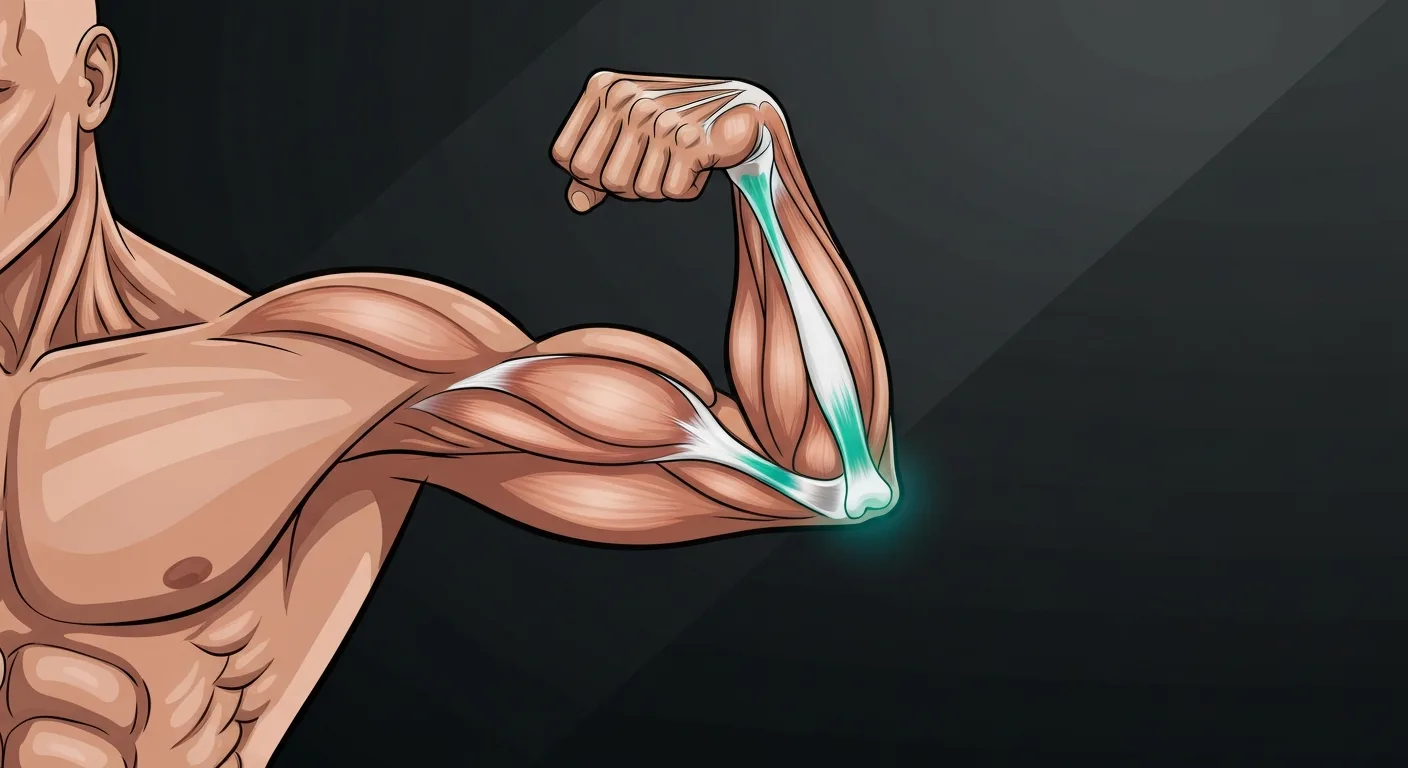
The biceps and triceps are antagonist pairs. When the biceps contract to flex the elbow (curling motion), the triceps relax and lengthen. When the triceps contract to extend the elbow (pressing motion), the biceps relax. This opposing relationship allows smooth, controlled arm movement.
However, both muscles also co-contract during stabilization. When you carry a heavy suitcase with a bent arm, the biceps hold the elbow flexed while the triceps provide a counterbalancing tension that protects the joint. This co-contraction increases joint stiffness and stability.
Pain that radiates through both muscles simultaneously — or in the gap between them — may indicate a nerve issue rather than a muscle problem. See our guide on pain between the bicep and tricep for more on this topic.
What This Means for Your Training
Understanding the size and strength relationship between biceps and triceps has practical training implications:
Prioritize triceps for arm size. If your primary goal is bigger arms, the triceps should receive at least as much — ideally more — direct training volume as the biceps. Exercises like dips, pushdowns, and overhead extensions are foundational.
Balanced development protects the elbow. A significant strength imbalance between the biceps and triceps can contribute to elbow joint stress. If one side of the joint is substantially stronger, it can create uneven forces that lead to elbow pain during training.
Train both muscles through their full range. The long head of the triceps crosses the shoulder joint, meaning it is most fully lengthened during overhead work. Similarly, the long head of the biceps crosses the shoulder. Complete development of both muscles requires exercises that challenge them at varying lengths — not just mid-range movements.
Compound pressing already trains triceps. Bench press, overhead press, dips, and push-ups all load the triceps significantly. Your biceps get less indirect work from compound movements, which is why curls are often more necessary for balanced development than extra tricep isolation for many lifters.
If your triceps feel disproportionately weak compared to your biceps, it is worth evaluating your programming. Our guide on why triceps feel weak covers common causes and solutions. And for a detailed look at how the bicep curl to tricep extension combo can train both muscles efficiently in one movement, see our technique breakdown.