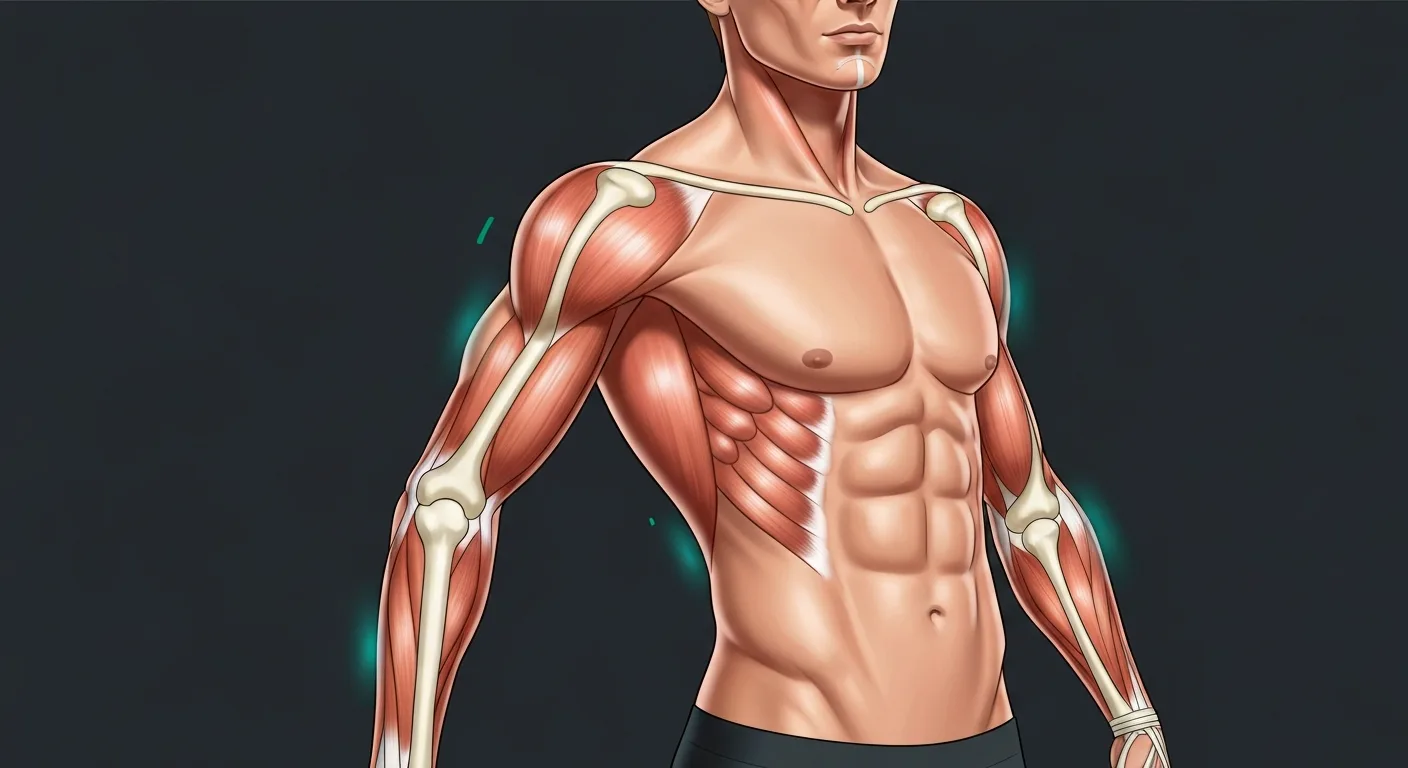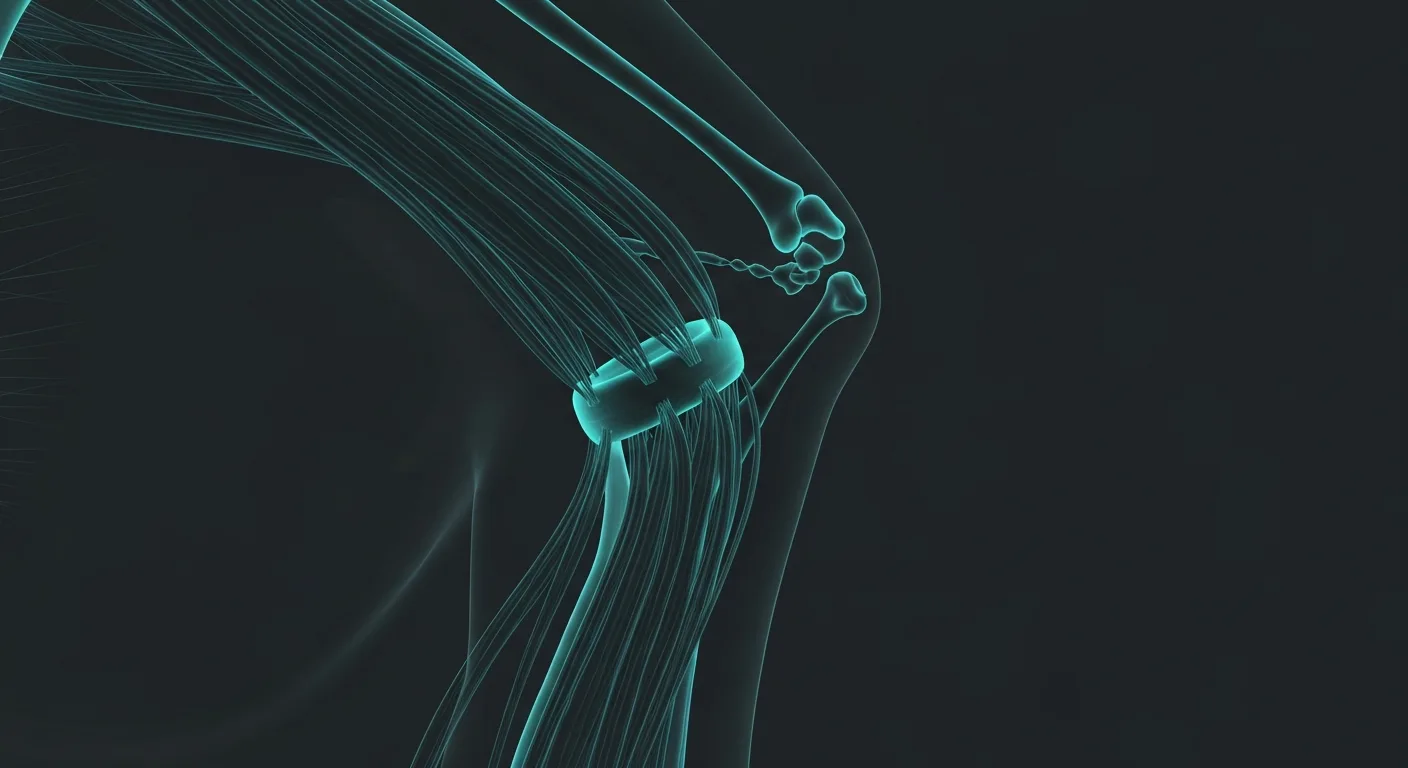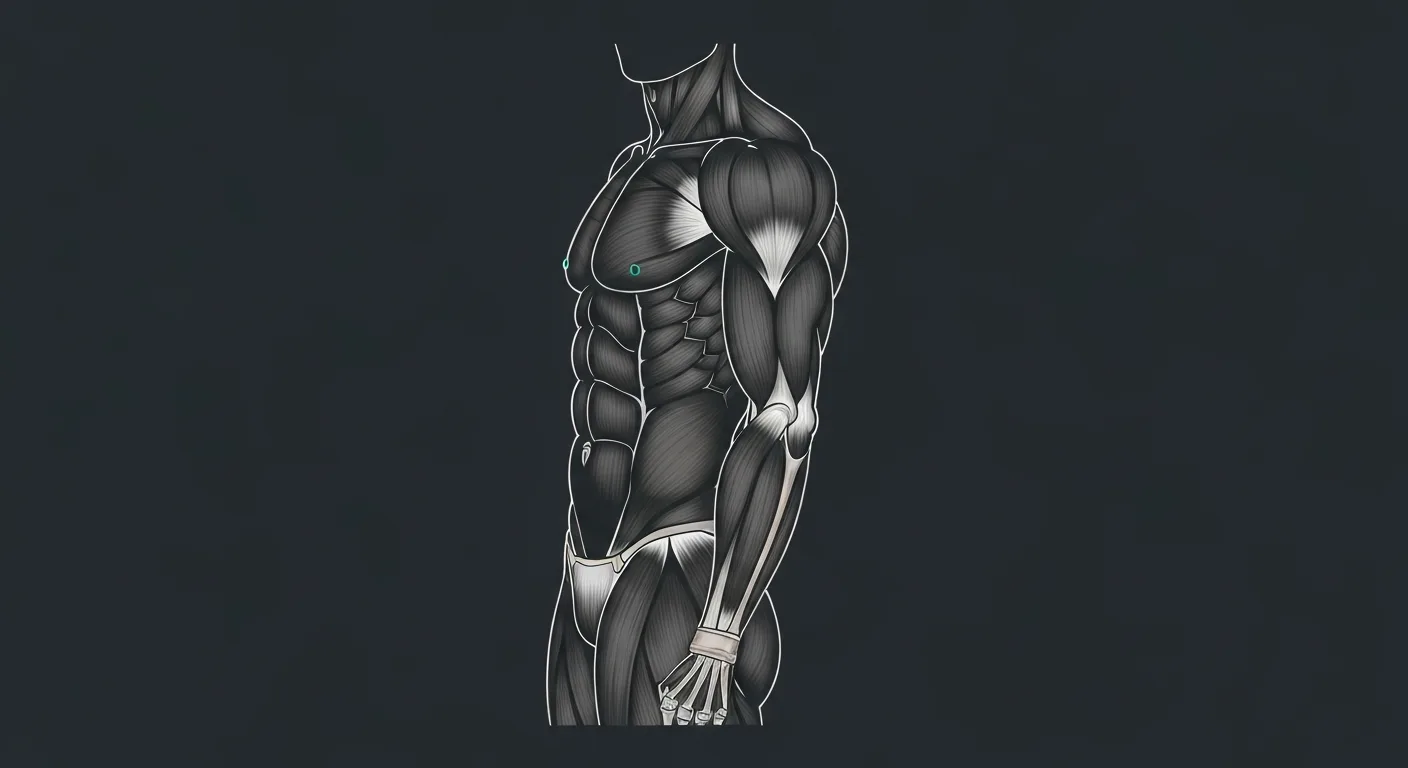
The triceps brachii is a large, three-headed muscle located on the posterior (back) surface of the upper arm. Its primary function is extending the elbow — straightening the arm from a bent position. It makes up approximately 60 to 65 percent of total upper arm mass, making it the dominant muscle of the upper arm by both size and force output.
Triceps Brachii Overview
The name "triceps brachii" means "three-headed muscle of the arm" in Latin. Unlike the biceps on the front of the arm, which has two heads, the triceps has three distinct sections — the long head, the lateral head, and the medial head. Each head has its own origin point, but all three converge into a single thick tendon that inserts on the olecranon process of the ulna at the elbow.
For a detailed breakdown of each head's unique characteristics and how to train them individually, see our dedicated guide on the three heads of the tricep.
Origin and Insertion
Origins (Proximal Attachments)
Each head of the triceps originates from a different location:
| Head | Origin | Key Detail |
|---|---|---|
| Long head | Infraglenoid tubercle of the scapula | Crosses the shoulder joint — the only head that does |
| Lateral head | Posterior humerus, superior to the radial groove | Creates the visible "horseshoe" shape on the outer arm |
| Medial head | Posterior humerus, inferior to the radial groove | Deepest head — lies beneath the long and lateral heads |
The long head's scapular attachment is functionally significant. Because it crosses both the shoulder and elbow joints, it is classified as a biarticular muscle. This means its length — and therefore its contractile efficiency — changes depending on shoulder position. When the shoulder is flexed (arm overhead), the long head is maximally stretched and can generate the most force. This is why overhead tricep extensions are so effective at targeting the long head.
Insertion (Distal Attachment)
All three heads merge into a common distal tendon that inserts on the posterior surface of the olecranon process of the ulna. This is the bony point you feel at the tip of your elbow. A small portion of tendon fibers also blend into the deep fascia of the forearm (the anconeus fascia), which helps stabilize the elbow during extension.
Nerve Supply
The entire triceps brachii is innervated by the radial nerve, which arises from the posterior cord of the brachial plexus. It carries fibers from nerve roots C6, C7, and C8, with C7 being the dominant contributor.
The radial nerve runs through the radial groove — a shallow channel on the posterior surface of the humerus — in direct contact with the bone. This makes it vulnerable to injury from humeral shaft fractures. A radial nerve injury can cause triceps weakness or paralysis, wrist drop, and sensory loss on the back of the hand.
Each head receives its own branch from the radial nerve, which allows independent neural control. EMG studies show that the medial head is active across all loading intensities, while the lateral and long heads are progressively recruited as force demands increase.
Blood Supply
The triceps receives its blood supply from branches of the deep brachial artery (profunda brachii), the superior and inferior ulnar collateral arteries, and recurrent branches from the posterior interosseous artery. The muscular portions have a rich vascular supply, but the distal tendon's blood supply is comparatively limited — a factor that contributes to the slower healing rate of tendon injuries compared to muscle strains.
Function of the Triceps Brachii
Primary: Elbow Extension
The triceps brachii is the primary extensor of the elbow joint. Every movement that involves straightening the arm — from a bench press lockout to opening a jar to throwing a ball — relies on the triceps. During forceful extension, all three heads contract simultaneously, though the medial head does the most work at lower intensities.
Secondary: Shoulder Extension (Long Head)
The long head assists the latissimus dorsi and posterior deltoid in shoulder extension — pulling the arm backward from a raised position. This function is relevant during movements like straight-arm pulldowns, rowing (the extension phase), and swimming strokes.
Tertiary: Shoulder Adduction (Long Head)
The long head also contributes to shoulder adduction — pulling the arm toward the midline of the body. This function is minor compared to the pectoralis major and latissimus dorsi but becomes relevant during heavy compound movements.
Joint Stabilization
The medial head and the tendinous expansion into the forearm fascia play a role in stabilizing the elbow during fine motor tasks. When you hold a pen or use a keyboard, the medial head provides a baseline level of tension that keeps the elbow joint stable without producing visible movement.
The Three Heads: Summary
While each head has unique characteristics, they are not separate muscles — they are portions of a single muscle that share a common tendon and nerve supply. However, you can preferentially emphasize one head over the others by selecting exercises that exploit their anatomical differences:
- Long head — most active when the shoulder is flexed (arm overhead). Targeted with overhead extensions and incline tricep work. It is the largest head and the primary contributor to arm thickness when viewed from the side.
- Lateral head — most active during heavy pressing with the arms at the sides. Lateral head exercises like pushdowns with a pronated grip and close-grip bench press build the horseshoe shape visible from behind.
- Medial head — fires during all tricep work but is preferentially targeted with reverse grip pushdowns, close-grip push-ups, and lighter extension work. Despite its deeper position, medial head development is essential for a full, complete look and joint stability.
The Triceps Reflex
The triceps reflex is a deep tendon reflex used in clinical neurological examinations. A physician taps the distal tricep tendon (just above the olecranon) with a reflex hammer. A normal response is an involuntary contraction of the triceps that briefly extends the forearm.
This reflex primarily tests the integrity of the C7 nerve root and the radial nerve pathway. An absent or diminished triceps reflex may indicate damage or compression at the C7 level — such as from a cervical disc herniation — or a lesion of the radial nerve. An exaggerated reflex may suggest upper motor neuron dysfunction.
Common Triceps Brachii Injuries
The triceps brachii is subject to several types of injuries, ranging from minor strains to complete tendon ruptures:
- Muscle pain and soreness — the most common complaint, usually from delayed-onset muscle soreness (DOMS) after unfamiliar or intense training.
- Muscle strains — acute tearing of muscle fibers, graded from 1 (mild) to 3 (complete rupture).
- Torn tricep muscle — a more severe strain involving significant fiber disruption. Recovery can take weeks to months depending on severity.
- Tendon rupture — a complete detachment of the distal tendon from the olecranon. Rare but serious, typically requiring surgical repair and rehabilitation.
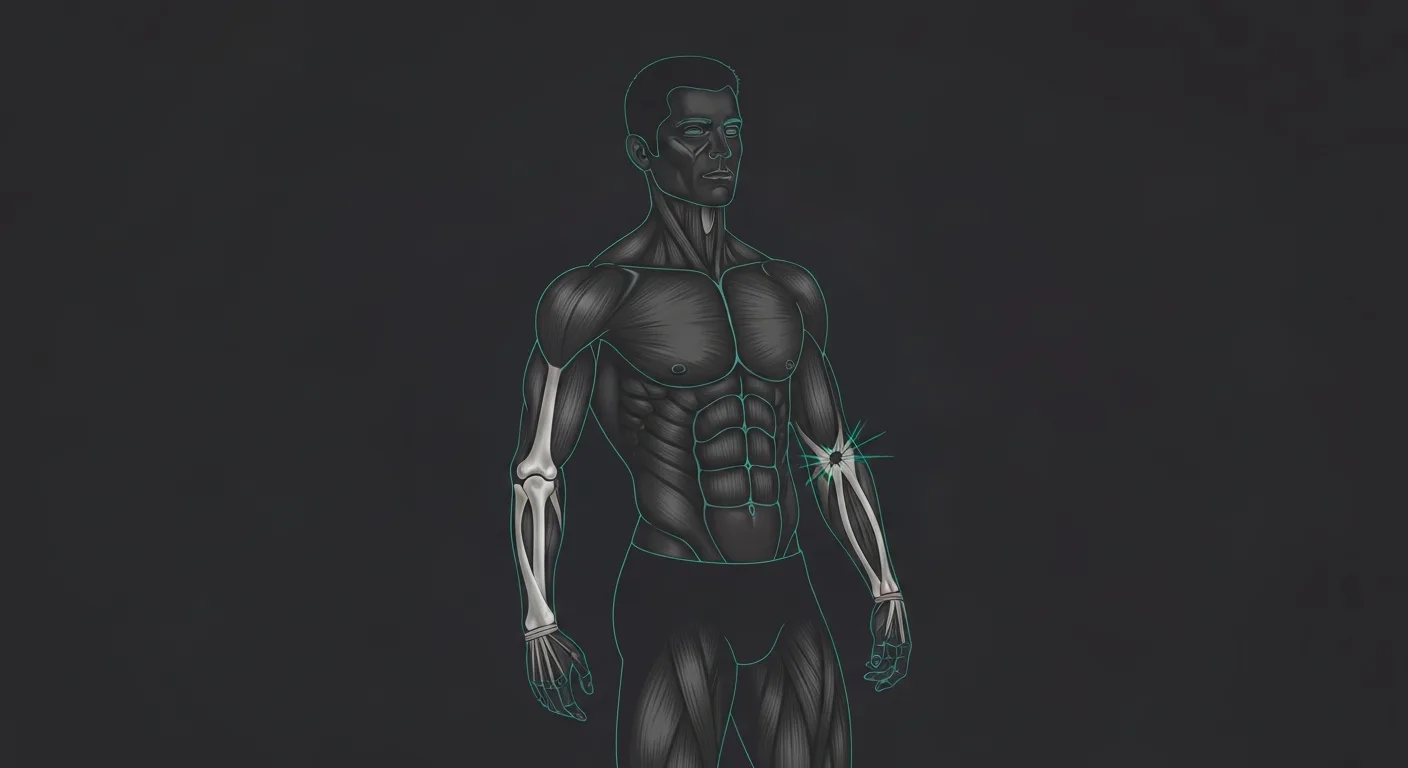
- Tendonitis — chronic overuse inflammation of the distal tendon, causing pain at the back of the elbow.
Regular stretching, gradual load progression, and attention to early warning signs are the best ways to protect the triceps from injury. If you notice unexplained bruising on the back of your arm after a workout, it may indicate a more serious issue than typical soreness.
Training the Triceps Brachii
Effective tricep training works all three heads through a variety of movement patterns. The best tricep exercises include a mix of compound pressing movements and isolation work:
- Compound movements — close-grip bench press, dips, and bench press variations load the triceps heavily alongside the chest and shoulders.
- Extension movements — tricep extensions in all their variations (overhead, lying, cable) isolate the triceps and allow targeted head emphasis.
- Pushdowns — a cable-based staple that emphasizes the lateral and medial heads.
The arm muscles anatomy page provides broader context on how the triceps integrates with the biceps, brachialis, and forearm muscles to produce complex arm movements.