A torn tricep recovery time depends on severity. Grade 1 tears heal in 2 to 4 weeks. Grade 2 partial tears take 4 to 8 weeks. A complete tear or tendon rupture requiring surgery needs 4 to 6 months of rehabilitation before full return to activity.
What Is a Torn Tricep?
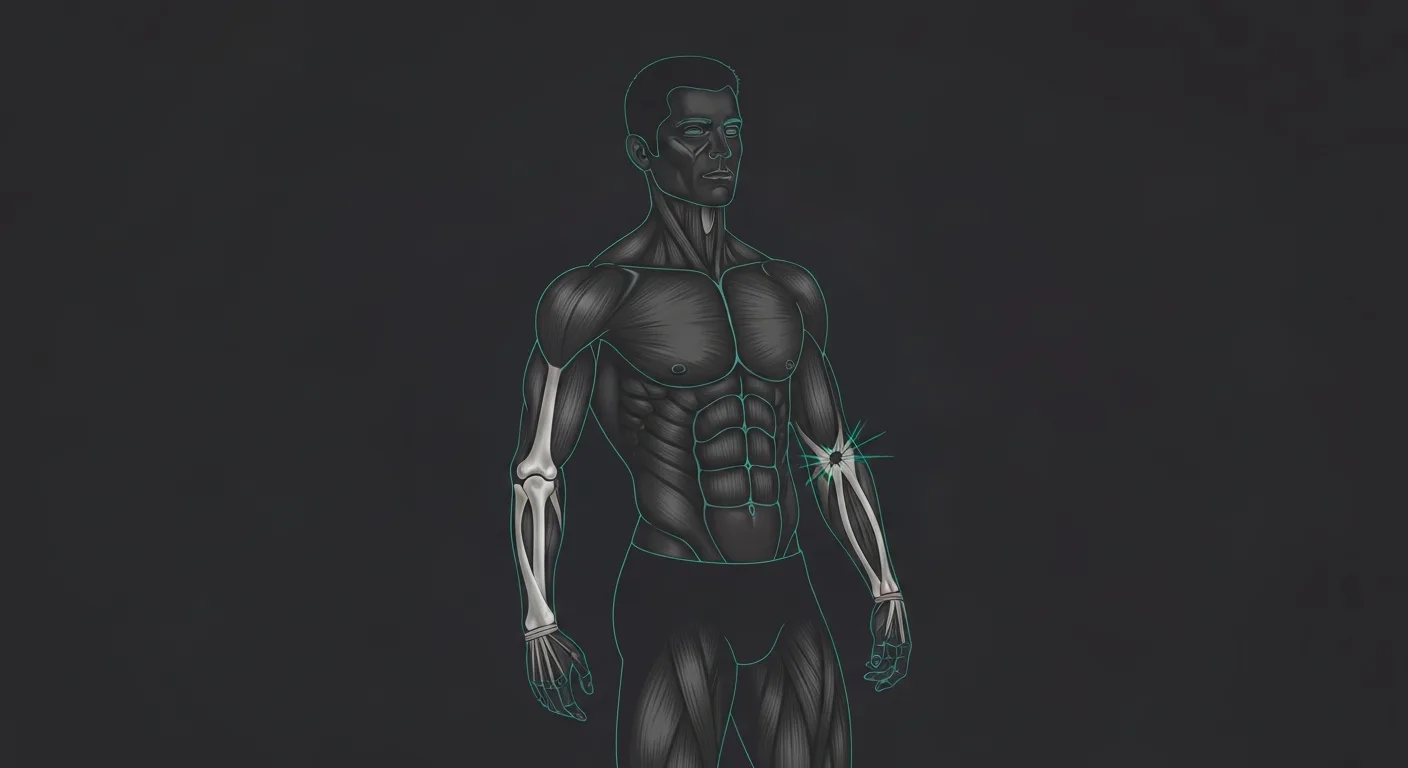
A torn tricep is a disruption of the triceps brachii muscle fibers or its tendon. The injury can occur in the muscle belly itself (a muscle tear) or at the distal tendon attachment near the elbow (a tendon tear). Muscle belly tears are more common in the general population, while tendon tears occur more often in athletes and lifters handling heavy loads.
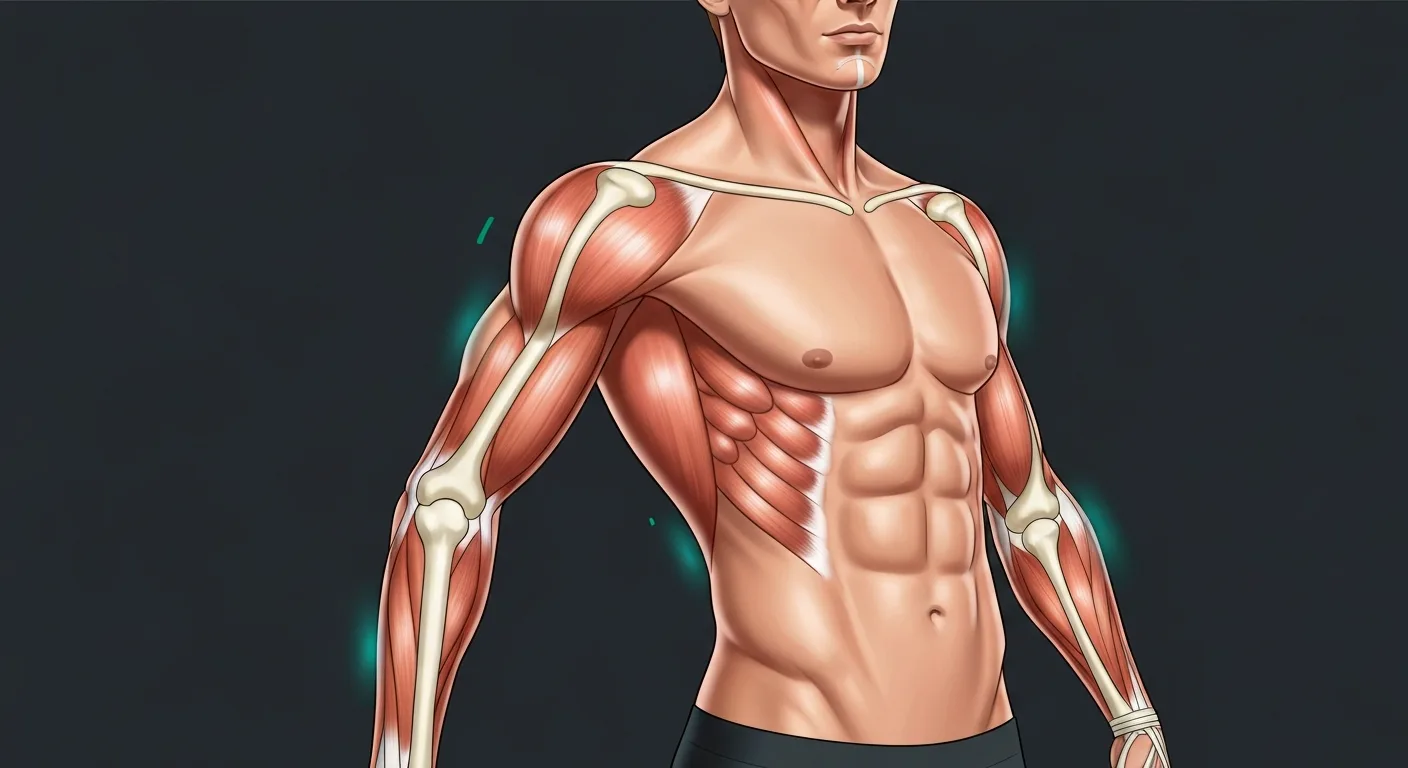
The triceps is the large three-headed muscle on the back of the upper arm responsible for straightening the elbow. It is active in every pushing and pressing movement, making tears particularly disabling for both daily life and training.
Symptoms of a Torn Tricep
The symptoms of a torn tricep vary by severity, but common signs include:
- Sudden sharp pain — at the back of the upper arm or near the elbow, often occurring during a forceful movement like a bench press, dip, or fall.
- Popping or snapping sensation — felt at the time of injury, especially in more severe tears.
- Swelling — develops within hours, concentrated at the tear site.
- Bruising — may appear within 24 to 48 hours and can spread down the arm toward the elbow. See our guide on tricep bruising for more on this.
- Weakness — difficulty or inability to straighten the arm against resistance.
- Visible deformity — in complete tears, you may notice a gap, bulge, or change in muscle shape.
- Tenderness to touch — localized pain when pressing on the injured area.
If you are experiencing tricep muscle pain without a clear injury event, it may be something less severe like delayed-onset muscle soreness (DOMS) or a minor strain.
Tear Grading System
Tricep tears are classified using the standard muscle strain grading system:
Grade 1 (Mild)
Microscopic tearing of muscle fibers. You feel tightness and mild pain but can still use the arm. Strength loss is minimal — usually less than 10 percent. Swelling is mild. Most people can continue modified daily activities.
Grade 2 (Moderate)
Partial tearing of a significant number of muscle fibers. Pain is more intense, and there is noticeable weakness when trying to extend the elbow. Swelling and bruising are visible. You may feel a "pulling" sensation during movement. The arm is functional but clearly compromised.
Grade 3 (Severe / Complete)
A complete tear through the muscle belly or tendon. Pain is immediate and severe, often accompanied by an audible pop. The arm cannot generate meaningful extension force. A visible gap or bunching of the muscle may be apparent. This grade almost always requires surgical repair.
What Causes a Tricep Tear?
Tricep tears typically result from one of these mechanisms:
- Eccentric overload — the muscle is forcefully stretched while contracting, such as the lowering phase of a heavy bench press or skull crusher.
- Direct impact — a blow to the back of the arm, common in contact sports.
- Falling on an outstretched hand — the sudden deceleration force travels up the arm and can tear the triceps.
- Fatigue-related failure — training to exhaustion with compromised form, where the muscle fails under a load it can no longer control.
Risk factors include age over 35, anabolic steroid use (muscles outgrow tendon capacity), previous tricep injuries, sudden increases in training intensity, and use of corticosteroid injections near the tendon.
How a Torn Tricep Is Diagnosed
A physician or sports medicine specialist will typically:
- Physical examination — palpating the muscle for gaps, testing extension strength against resistance, checking range of motion, and noting swelling patterns.
- Ultrasound — a first-line imaging tool that can identify partial tears, fluid collections, and tendon integrity in real time.
- MRI — the gold standard for detailed assessment of tear location, size, and retraction. Essential for surgical planning in grade 2 and 3 injuries.
For a detailed discussion of the most severe presentation, see our tricep rupture symptoms and diagnosis guide.
Treatment Options
Conservative Treatment (Grade 1 and Most Grade 2)
The initial approach for mild to moderate tears follows the PRICE protocol:
- Protection — avoid movements that reproduce pain. A sling may be used for the first few days.
- Rest — relative rest, not complete immobilization. Gentle range of motion should begin as soon as tolerable.
- Ice — 15 to 20 minutes every 2 to 3 hours for the first 48 to 72 hours.
- Compression — an elastic bandage or compression sleeve to manage swelling.
- Elevation — keeping the arm elevated above heart level when resting.
After the acute phase, rehabilitation focuses on progressive loading. A support brace may be helpful during the early return to activity phase.
Surgical Treatment (Grade 3 and Complete Ruptures)
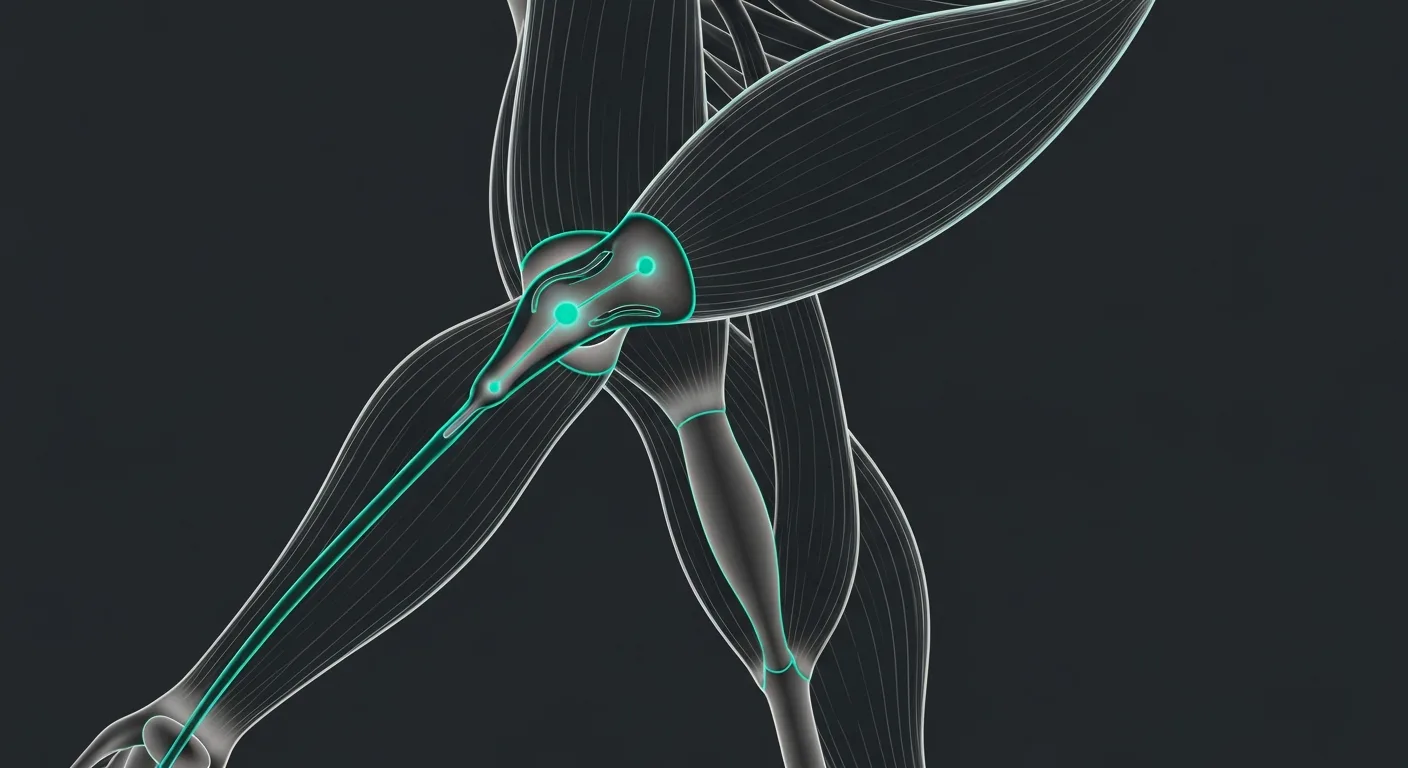
Complete tears and full tendon ruptures typically require surgical repair, especially in active individuals. The procedure involves reattaching the torn tendon to the olecranon using suture anchors or drill holes. Surgery is most successful when performed within the first 2 to 3 weeks after injury, before the tendon retracts and scar tissue forms. Our tricep repair protocol covers the full post-surgical rehabilitation timeline.
Recovery Timeline
| Grade | Timeline | Return to Training |
|---|---|---|
| Grade 1 | 2 to 4 weeks | Modified training at 2 to 3 weeks |
| Grade 2 | 4 to 8 weeks | Gradual return at 6 to 10 weeks |
| Grade 3 (surgery) | 4 to 6 months | Full strength at 6 to 9 months |
During recovery from any grade, maintain fitness through lower body work and activities that do not stress the injured arm. Returning too early is the most common cause of re-injury and prolonged recovery.
Rehabilitation Principles
Successful rehabilitation progresses through three phases:
Phase 1 — Protection (weeks 1 to 2). Pain management, gentle range of motion, avoid loading the triceps. For surgical cases, the arm may be in a splint or brace.
Phase 2 — Progressive loading (weeks 2 to 6 for conservative; weeks 6 to 12 for surgical). Introduce isometric contractions, then light concentric/eccentric exercises. Resistance band exercises are excellent during this phase because they allow progressive loading with minimal risk.
Phase 3 — Return to activity (varies by grade). Gradually reintroduce compound pressing and sport-specific movements. Criteria for return include pain-free full range of motion, strength within 90 percent of the uninjured side, and the ability to perform functional tasks without apprehension.
Throughout recovery, tricep stretches should be incorporated once pain allows, to maintain tissue length and prevent adhesions. Trigger point release may also help address secondary muscle tightness that develops during the guarding phase.
Preventing Tricep Tears
While not all tears are preventable, you can reduce your risk by warming up thoroughly before heavy pressing, increasing training loads gradually (no more than 10 percent per week), using proper form on exercises like bodyweight tricep work and heavy presses, listening to early warning signs like persistent elbow pain or unusual soreness, and maintaining balanced strength between the triceps and biceps.
Tricep Compression Sleeve
Support and compression during torn tricep recovery.
Why we suggest it: Reduces swelling and provides stabilization during return to activity.
Check Price on Amazon →As an Amazon Associate, we earn from qualifying purchases.
When to See a Doctor
Seek medical attention if you felt a pop or snap during the injury, cannot straighten your arm against any resistance, notice a visible gap or deformity in the muscle, have significant swelling or bruising that worsens after 48 hours, or if pain does not improve with rest after one week. A pulled tricep can sometimes be managed at home, but any suspected tear beyond grade 1 should be evaluated by a professional to rule out a more serious injury.