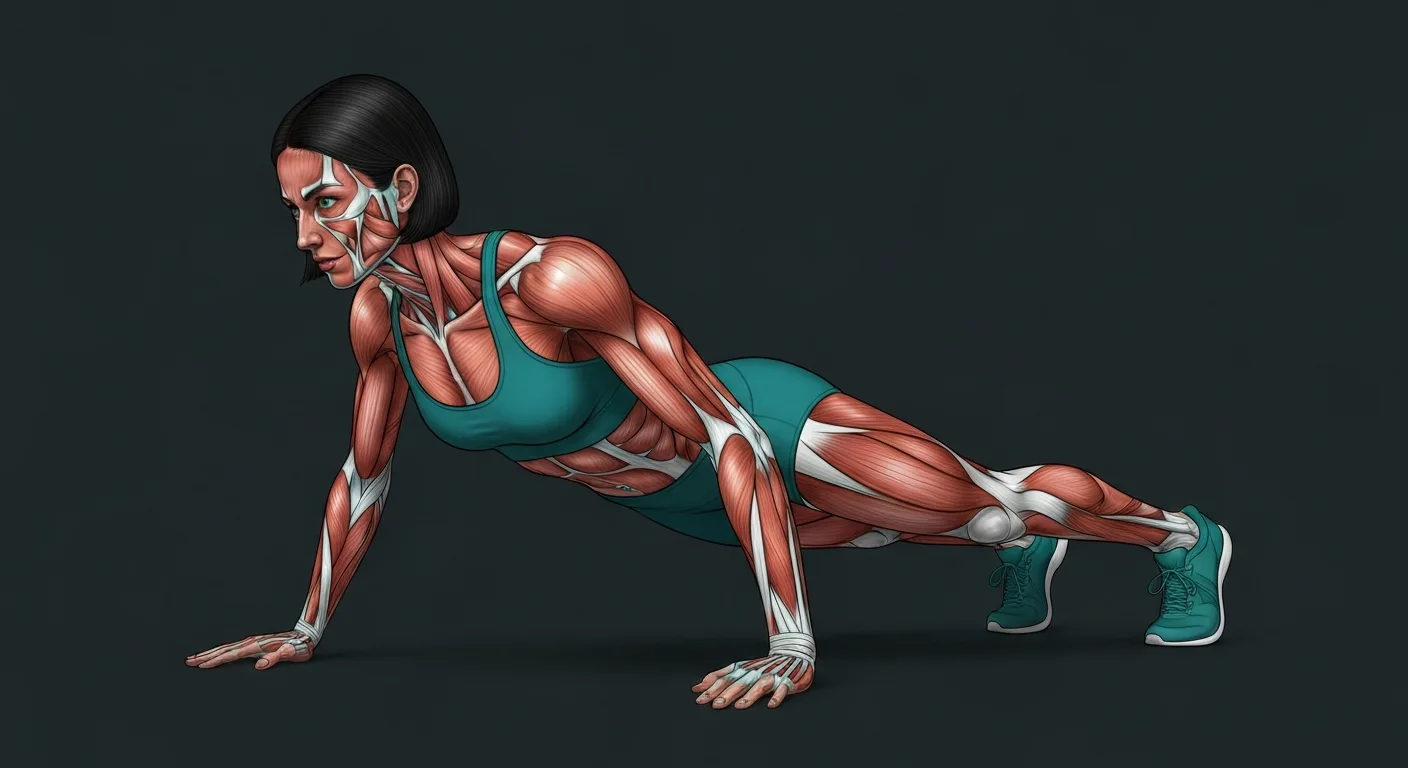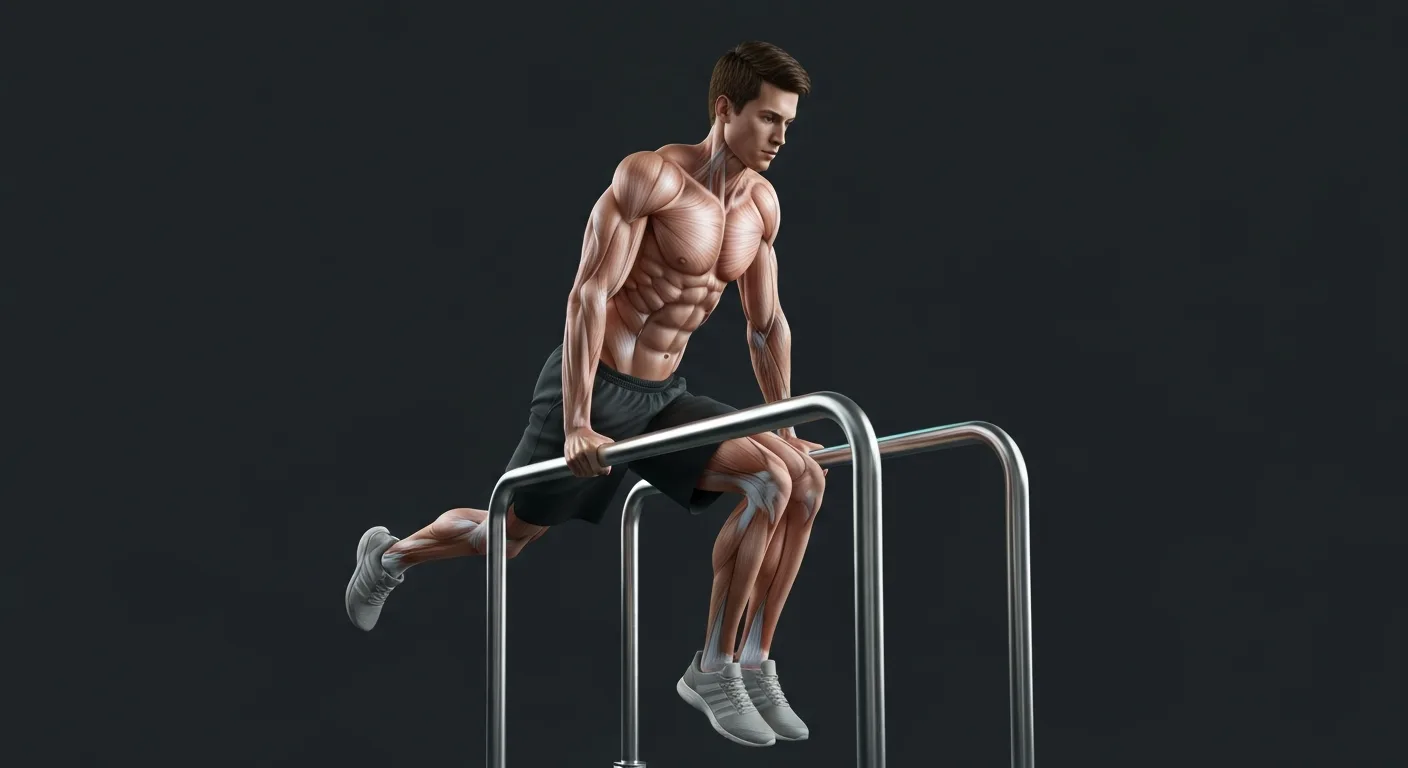
To do tricep dips with proper form, grip parallel bars with arms extended, keep your torso upright, lower until upper arms are parallel to the floor, and press to full lockout. Keep elbows close to the body and control the descent for 2 to 3 seconds. The upright torso position is what differentiates a tricep dip from a chest dip.
Muscles Worked
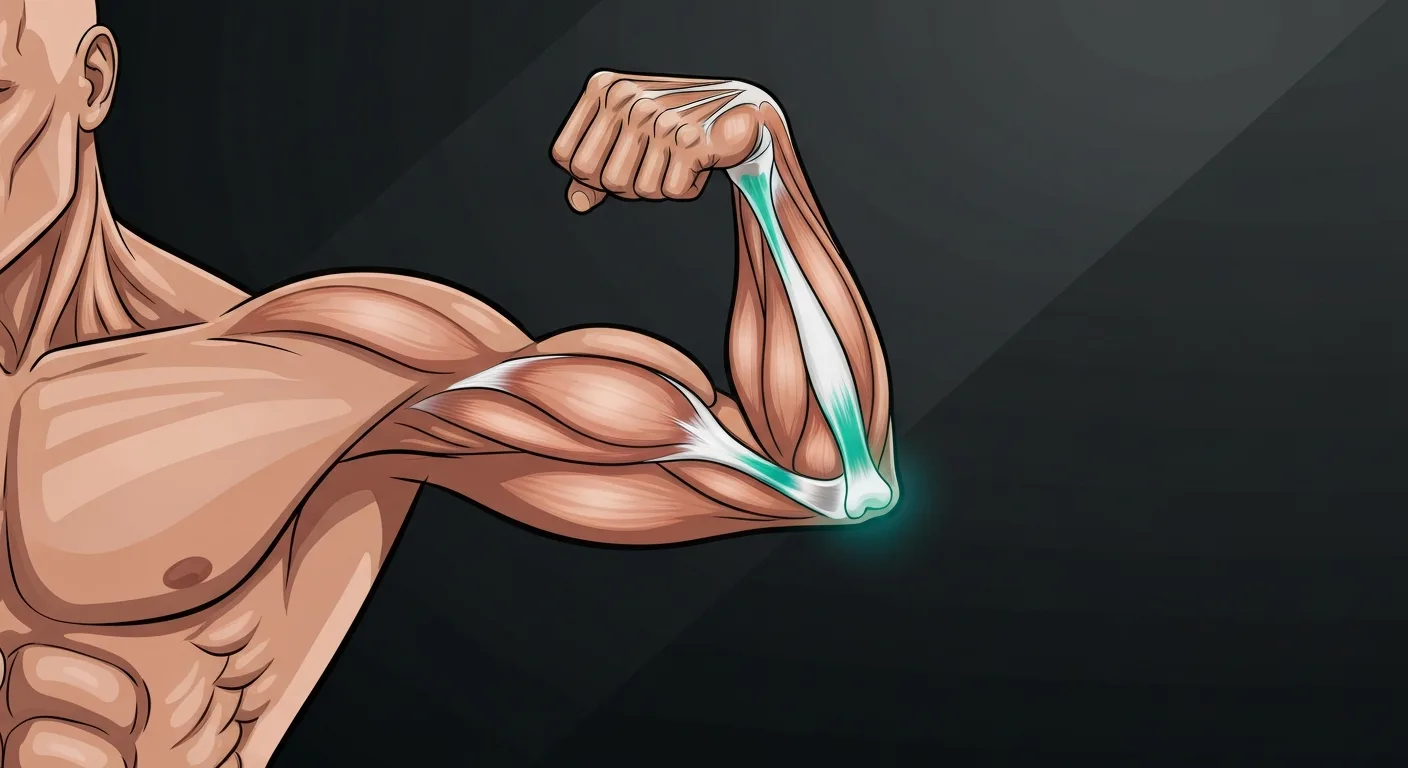
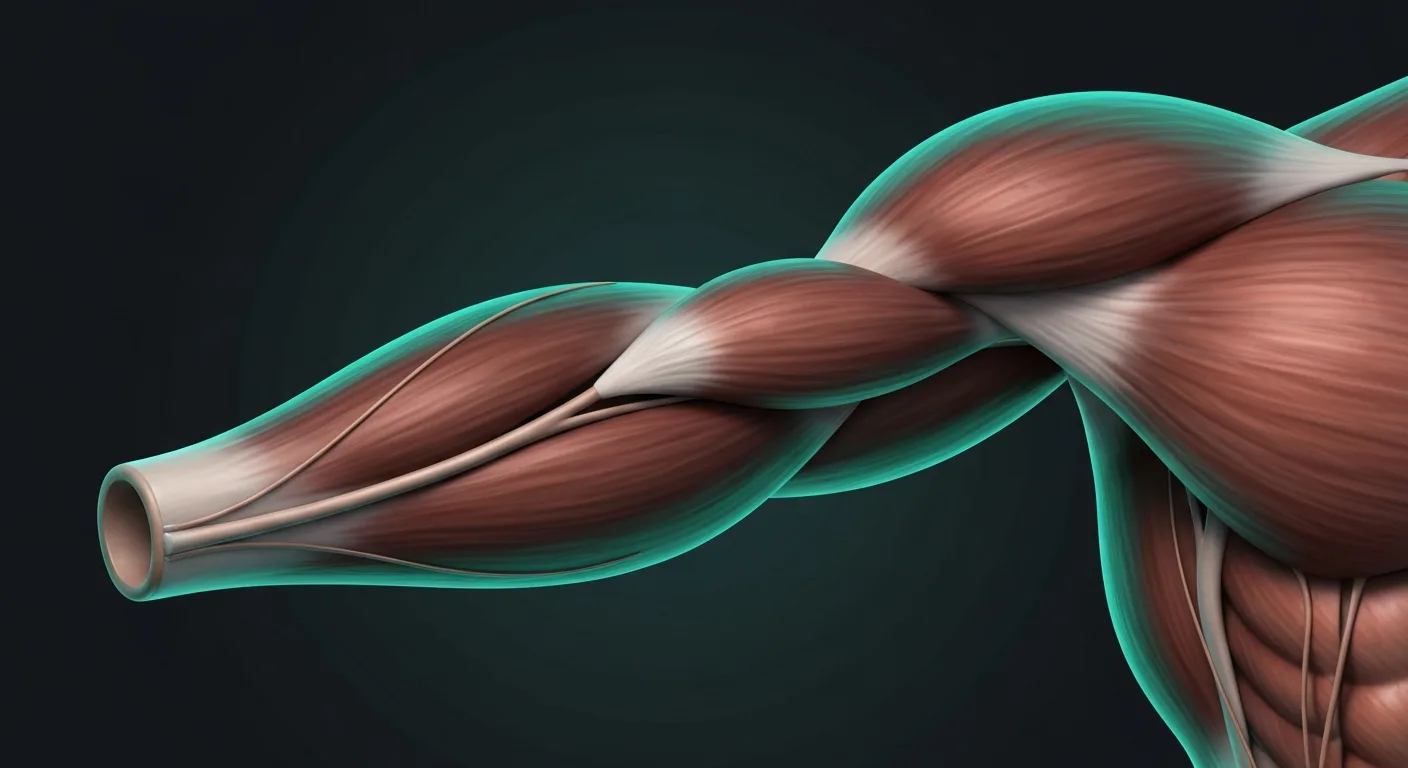
Tricep dips primarily target all three heads of the triceps brachii. With an upright torso, the lateral head and medial head bear the greatest load, while the long head assists. Secondary muscles include the anterior deltoid, pectoralis minor, and core (for stabilization). The triceps are the primary movers during the lockout phase — the top half of the movement.
Step-by-Step Form Guide
Setup: Grip parallel bars (or a dip station) with palms facing inward. Arms fully extended, shoulders down and back. Feet crossed behind you or straight down.
Descent: Bend the elbows to lower your body. Keep elbows tracking along your sides — not flaring outward. Lower until upper arms reach parallel to the floor. Control the speed — 2 to 3 seconds minimum. Going below parallel increases shoulder stress without proportional tricep benefit.
Ascent: Press through the palms, extending the elbows to full lockout. Squeeze the triceps at the top. Do not bounce at the bottom or use momentum.
Torso position: Upright. This is the single most important cue for tricep-dominant dips. Leaning forward shifts the load to the chest and front delts. If you find yourself leaning, the weight (body weight plus any added load) may be too heavy.
Variations
Bench Dips (Beginner)
Hands on a bench behind you, feet on the floor. Lower by bending the elbows, press back up. The easiest variation — good for building baseline strength before progressing to parallel bars. Increase difficulty by elevating feet on a second bench or adding weight on the lap.
Band-Assisted Dips (Beginner to Intermediate)
Loop a resistance band across the bars and place your knees on it. The band provides the most assistance at the bottom (hardest part) and least at the top. Gradually move to thinner bands as you get stronger.
Weighted Dips (Intermediate to Advanced)
Add external load using a dip belt, weighted vest, or dumbbell between the ankles. The gold standard for progressive overload on dips. Start with 5 to 10 percent of body weight and add 2.5 to 5 pounds per week. Heavy weighted dips are one of the best exercises for bench press carryover.
Ring Dips (Advanced)
Performed on gymnastic rings. The instability demands maximum tricep stabilization. Only attempt after mastering 15+ strict parallel bar dips. Outstanding for building functional pressing strength.
Korean Dips (Advanced)
Dipping behind a bar or ledge with the bar behind your back. Extreme tricep and shoulder demand. See our pull-up bar exercises guide for form details.
Programming
| Level | Variation | Sets × Reps | Rest |
|---|---|---|---|
| Beginner | Bench or band-assisted dips | 3 × 8–12 | 90 sec |
| Intermediate | Bodyweight dips | 3–4 × 8–12 | 90 sec |
| Advanced | Weighted dips | 4 × 6–10 | 2–3 min |
Place dips early in your push day workout after bench press but before isolation work. They are demanding enough to serve as a primary exercise. Follow with pushdowns or overhead extensions for isolation work.
Benefits of Tricep Dips
One of the highest-load bodyweight exercises possible — progressible from beginner to very advanced with added weight. Trains the triceps through a large range of motion with compound pressing mechanics. Builds both size and functional pressing strength. Minimal equipment required — a stable chair, countertop, or dip station. Rated among the best tricep exercises overall.
Common Mistakes
Leaning too far forward (turns it into a chest exercise). Going too deep below parallel (increases shoulder injury risk). Using momentum or bouncing at the bottom. Not reaching full lockout at the top. Flaring the elbows wide. Shrugging the shoulders up toward the ears (keep them depressed).
Safety and Contraindications
If you have anterior shoulder pain, limit depth and consider substituting with machine dips or close-grip bench press. If you experience elbow pain, reduce depth and added weight. Warm up with arm circles, light tricep stretches, and a set of bench dips before progressing to parallel bars. After any tricep strain, clear dips with your therapist before returning — the loaded stretch at the bottom can stress healing tissue.